
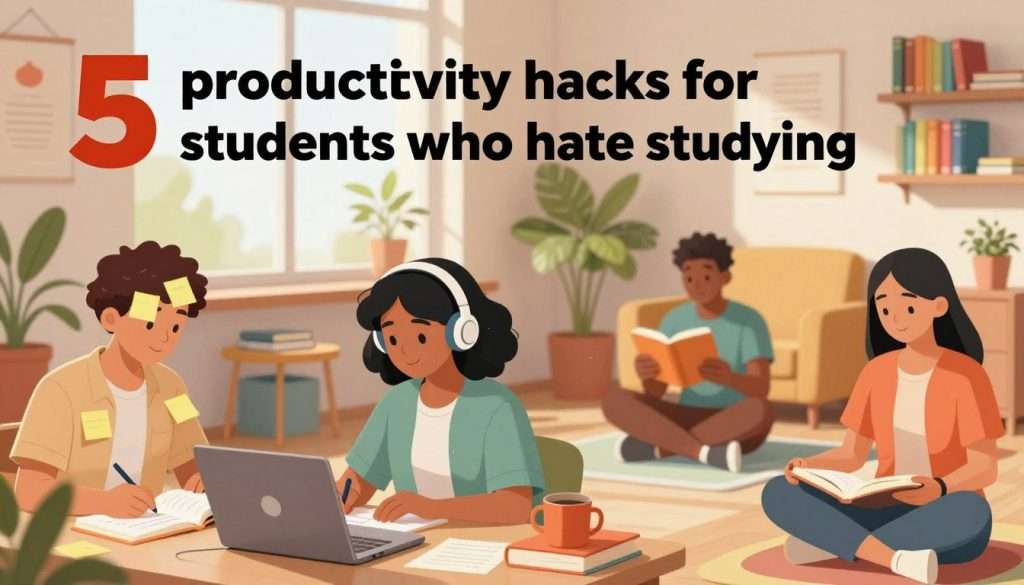
Opening a heavy textbook can feel like hiding under your covers. We totally get it. Not everyone finds joy in long hours of quiet reading or solving complex problems.
But what if we told you that reaching your academic goals doesn’t have to be a nightmare? We believe that everyone has the potential to succeed with the right tools.
William Wadsworth, a Cambridge University-trained cognitive psychologist, says, “With only a few small tweaks to your study habits, you can easily increase your productivity, improve your memory and streamline your study sessions.”
We want to help you turn daily dread into genuine success. By using smart student productivity strategies, you can reclaim your precious free time without sacrificing your grades.
Our mission is to make learning feel less like a heavy chore and more like a satisfying win. Let’s dive into these game-changing methods together and upgrade your routine!
Key Takeaways
- Small habit changes lead to massive academic results.
- Psychology-backed methods help you remember more in less time.
- Streamlining your sessions reduces overall stress and anxiety.
- Effective routines allow for more guilt-free relaxation.
- Turning learning into a game makes difficult tasks enjoyable.
- Consistency is more important than long, exhausting marathons.
Why Most Students Struggle with Studying
We’ve all been there – staring at notes, feeling overwhelmed, and wondering why studying is so hard. Many students find studying tough, and it’s not just about lacking motivation or a bad study routine. The reasons are complex, involving psychological, environmental, and personal factors.
One big challenge is using the wrong study techniques. Students often use methods that don’t fit their learning style, leading to frustration and inefficiency. For example, some try to cram all studying into one night, only to forget most of it soon after. Understanding your learning style and adapting your study techniques can make a big difference.
Another key factor is the study environment. Distractions at home, in the library, or online can ruin study sessions. Creating a conducive study environment is essential. This might mean finding a quiet spot, using noise-cancelling headphones, or setting a “do not disturb” policy during study hours.
Let’s look at some common obstacles students face:
- Lack of clear goals and motivation
- Ineffective study techniques
- Distracting study environments
- Poor time management
Understanding these challenges is the first step to overcoming them. By recognizing what’s holding you back, you can start to make changes that will improve your study sessions.
To boost your motivation and study effectiveness, consider thesestudent motivation tips: Break your study sessions into manageable chunks, reward yourself for milestones achieved, and find a study buddy or group for accountability.
The Science Behind Study Resistance
Ever wondered why studying feels like a chore? It’s not just you; many students face study resistance. Let’s dive into the science behind this and find out why our brains often shy away from studying.
Understanding Your Brain’s Natural Resistance
Our brains are designed to save energy, and studying is seen as a high-energy task. This resistance comes from our brain’s preference for immediate rewards over long-term gains. When we face a study session, our brain compares the effort to the potential rewards. Often, it decides the effort isn’t worth it.
Think of it like this: Your brain acts like a smartphone in battery saver mode. When studying is intense, it goes into “low power mode” to save energy. To beat this, we must make studying more rewarding or efficient.
The Role of Dopamine in Learning Motivation
Dopamine, known as the “motivation molecule,” is key in learning. It’s released when we enjoy something or achieve a goal. The problem is, studying, which can be hard or dull, doesn’t always trigger a big dopamine release. That’s where “temptation bundling” comes in – pairing a fun activity with a less enjoyable task to boost motivation.
For instance, listening to your favorite podcast while doing a dull study task can make it more fun. It’s about making studying rewarding by linking it to something you love.
By grasping the science behind study resistance and using dopamine, you can develop effective study habits and productivity techniques for students that help you, not hinder you.
Hack 1: The Pomodoro Technique with a Reward Twist
Boost your productivity with the Pomodoro Technique. It’s a simple hack for students who struggle with staying focused. Work in focused 25-minute increments, followed by a 5-minute break. Add a reward twist to make studying more enjoyable.
How the Modified Pomodoro Method Works
The traditional Pomodoro Technique is straightforward. Work for 25 minutes, then take a 5-minute break. We’re going to modify it by adding a reward system. After completing a set of Pomodoro sessions, take a longer break of 15-30 minutes.
During this longer break, enjoy a reward you’ve chosen beforehand. It could be taking a short walk, enjoying a snack, or watching a funny video.
The key is to make the reward meaningful and motivating. This way, you’ll look forward to the breaks and stay focused during your study sessions.
https://www.youtube.com/watch?v=GU80CBHuL4I
Customizing Your Time Blocks for Maximum Focus
One size doesn’t fit all when it comes to the Pomodoro Technique. You can customize the length of your work sessions and breaks. Some people prefer 20-minute work sessions with 3-minute breaks, while others work better with 30-minute sessions and 7-minute breaks.
Experiment with different combinations to find what works best for you. Adjust the frequency and duration of your longer breaks. The goal is to stay focused during your work sessions and feel refreshed during your breaks.
Best Apps and Tools to Implement This Hack
There are many apps and tools available to help you implement the Pomodoro Technique. Here are a few popular options:
| Tool | Description | Platform |
|---|---|---|
| Pomodoro Timer | A simple, customizable timer for your Pomodoro sessions | Web, Mobile |
| Focus Booster | A Pomodoro timer with features for tracking productivity | Web, Mobile |
| Toggl | A time-tracking tool that can be used for Pomodoro sessions | Web, Desktop, Mobile |
These tools can help you stay on track and make the most out of your study sessions.
Hack 2: Gamify Your Study Sessions
Imagine studying was as fun as playing your favorite video game. That’s what we aim for. By making your study sessions more like games, you can enjoy learning more and work better.
Gamifying your study means adding game elements to your learning. This makes studying more fun and keeps you motivated. Let’s see how you can do this.
Creating a Point System for Study Tasks
One great way to make studying fun is by using a point system. Give points to tasks based on how hard they are or how long they take. For example, reading a chapter might get you 10 points, while a quiz could get you 20.
To start, list your study tasks and give them points. You can use a spreadsheet or an app to keep track. Here’s an example of what your point system could look like:
| Task | Points |
|---|---|
| Reading a chapter | 10 |
| Completing a practice quiz | 20 |
| Solving 20 math problems | 15 |
| Creating flashcards | 5 |
Using Rewards That Actually Motivate You
Once you have your points, pick rewards that excite you. These should be things you really enjoy, like watching a funny video or eating your favorite snack.
Choose rewards that truly motivate you. For some, it’s about relaxing. For others, it’s about having fun or feeling accomplished.
Study Apps That Turn Learning into a Game
Many study apps use gamification to make learning fun. They offer points, leaderboards, and badges to keep you motivated.
Some top apps include:
- Duolingo: A language app that makes learning fun and interactive.
- Quizlet: Offers flashcards, tests, and games to help you learn.
- Forest: Helps you stay focused by growing a virtual forest.
By using these strategies, you can make studying more efficient and enjoyable.
Breaking Down the Motivation Barrier
Breaking down the motivation barrier is key for students to make studying easier. We all struggle to start, but there are ways to get past this.
One top student motivation tip is to split big tasks into smaller ones. The Exam Study Expert says this helps avoid feeling overwhelmed. By breaking down your study material, you can tackle one thing at a time. This makes the task less scary.
For example, instead of studying a whole chapter at once, break it down. Study one topic at a time, like a specific concept or a set of problems. This way, you’re not overwhelmed and can really understand each idea before moving on.
Another way to boost student productivity is to change how you see studying. Often, we don’t want to study because of past experiences or dislike for the subject. By seeing the benefits of studying, like better understanding and reaching your goals, you can start to like learning more.
To use these strategies well, try these tips:
- Set clear, achievable goals for each study session.
- Create a study space that’s free from distractions.
- Use a timer to stay focused.
- Treat yourself after each study task to encourage good habits.
By adding these student motivation tips to your study routine, you can overcome the first hurdle of studying. Start small and stay consistent. As you keep going, studying will become easier and less of a burden.
Hack 3: The Two-Minute Rule for Getting Started
One of the best ways to beat study resistance is to make starting ridiculously easy. The Two-Minute Rule says do tasks that take less than 2 minutes right away. This trick gets your brain moving.

Why Starting is Harder Than Continuing
Starting a task is always harder than keeping at it. This is called “activation energy” in psychology. By lowering this energy, starting to study becomes easier.
The Two-Minute Rule makes the first step so small, you can’t say no. Instead of “I’ll study for two hours,” say “I’ll just open my textbook for 2 minutes.” This small step can lead to a longer study session.
Implementing Micro-Study Sessions
To use the Two-Minute Rule, find the smallest step towards your study goal. This could be:
- Opening your study materials
- Writing down one key question related to the topic
- Reading the first paragraph of a chapter
After starting, you’ll likely keep going. The trick is to keep it up and build on these small sessions.
Building Momentum Through Small Wins
The Two-Minute Rule is about starting and keeping momentum. Every small success, no matter how small, boosts your motivation. Celebrating these wins helps you stay on track.
As you get better at starting, you can study longer and harder. The aim is to create a study routine you can keep up with. Use those first small wins as your base.
Hack 4: Study in Bursts with Active Recall
Ready to boost your study sessions? Let’s explore Hack 4: Study in Bursts with Active Recall. This method is a game-changer for students who find it hard to remember information. By using short, focused study sessions and active recall, you can greatly improve your studying efficiency and memory.
So, why is this hack so effective? It’s because our brains work best when we actively recall information. This strengthens our brain’s ability to hold onto that information. Active recall is at the core of this process.
What Active Recall Actually Means
Active recall means actively recalling information from memory, not just re-reading it. It’s as simple as testing yourself on a concept or trying to remember key terms without looking at your notes. The key is to actively engage with the material, not just passively read or listen.
As educator and author,
“Testing is not just a measurement tool; it’s a powerful learning strategy.”
This quote shows how important active recall is in learning.
Techniques for Effective Active Recall Practice
Here are some ways to practice active recall effectively:
- Practice quizzes or flashcards
- Summarizing notes in your own words
- Creating concept maps or diagrams
- Self-testing with practice exams or quizzes
Let’s see how these techniques fit into a study routine:
| Technique | Description | Example |
|---|---|---|
| Practice Quizzes | Test yourself on the material | Use online quiz tools or create your own questions |
| Flashcards | Review key terms and concepts | Use apps like Anki or create physical cards |
| Summarizing Notes | Distill information into key points | Write a summary of a chapter or lecture |
How to Use Flashcards Without Boring Yourself
Flashcards are great for active recall, but they can get dull if not used right. Here are some tips to keep your flashcard practice interesting:
- Use spaced repetition to review cards at the best times.
- Create mnemonics or associations to help remember hard terms.
- Mix up the types of questions or prompts on your cards.
- Use different formats, such as images or audio, to add variety.
By adding these strategies to your study routine, active recall can become a fun and effective part of learning. Remember, the goal is to improve studying efficiency and make studying more engaging.
Creating Your Ideal Study Environment
Creating a great study space is a key student productivity strategy. Your study area greatly affects your focus and memory. We’ll look at how to make the perfect study spot, focusing on reducing distractions and the right background noise.
Eliminating Distractions Without Feeling Isolated
Finding a quiet spot to study can be tough. It’s about balancing less distraction and staying connected, says Laura Vanderkam, a productivity expert.
“You can’t control the environment entirely, but you can control how you respond to it.”
To find this balance, try noise-cancelling headphones or a quiet library or coffee shop. Setting clear boundaries with family and friends also helps protect your study time.
The Right Background Noise for Focus
Background noise affects your ability to stay focused while studying. Some like silence, while others find certain sounds help. Studies show classical music can boost brain performance.
Try different background noises to see what works for you. Apps like Noisli or SimplyNoise can help create the perfect sound environment for focus.
By using these tips, you can make a study space that boosts your productivity and helps you reach your goals.
Hack 5: Body Doubling and Accountability Partners
Studying with someone else can really boost your productivity. This method is called body doubling. It’s great for students who find it hard to stay motivated.
Body doubling means having someone with you while you study. It creates a sense of teamwork and responsibility. This can be a friend, family member, or even someone online. Having someone there helps you stay focused and motivated.

The Psychology of Body Doubling
Body doubling works because of its psychological effects. Studying alone can lead to distractions. But with someone else around, you’re more likely to stay on track. This is because of the social pressure and sense of responsibility.
This idea is based on social facilitation. It says people do better when others are watching. Body doubling uses this to keep you focused and driven.
Finding the Right Study Partner or Group
To get the most out of body doubling, you need the right study buddy or group. Here are some tips:
- Find someone with similar goals and schedule.
- Pick a partner who is dedicated and motivated.
- Think about joining a study group for more connections.
- Talk openly about what you need and expect.
By finding the right study partner or group, you create a supportive environment. This environment boosts your productivity and motivation.
Virtual Body Doubling Options
Today, you don’t need to be in the same room to benefit from body doubling. Virtual options are becoming more popular. They let you connect with others from anywhere.
Some top virtual body doubling platforms include:
- Video conferencing tools like Zoom or Google Meet.
- Online study communities and forums.
- Social media groups focused on studying and productivity.
These options are flexible and convenient. They make it easier to find a study buddy or group that fits your life.
5 Productivity Hacks for Students Who Hate Studying: Putting It All Together
We’ve looked at 5 productivity hacks. Now, let’s mix them to make a plan that suits you. By using these strategies, you can study better and enjoy it more.
First, let’s go over the 5 hacks. We talked about the Pomodoro Technique with rewards, making studying a game, and starting small with the two-minute rule. We also discussed studying in short bursts and studying with a friend for accountability.
Creating Your Personalized Productivity Plan
To make your plan, pick the hack you like best. Maybe it’s turning study into a game or starting small. Try mixing different hacks to see what fits your learning style.
Think about making a table to organize your plan:
| Hack | How to Implement | Frequency |
|---|---|---|
| Pomodoro Technique | 25 minutes study + 5 minutes break | 3-4 sessions daily |
| Gamify Study Sessions | Create a point system for tasks | Daily |
| Two-Minute Rule | Start with a 2-minute study session | As needed |
| Active Recall | Use flashcards or practice quizzes | 3 times a week |
| Body Doubling | Study with a friend or online group | 2-3 times a week |
Tracking Your Progress Without Overwhelm
It’s important to track your progress. But too much data can be overwhelming. Focus on a few key metrics that matter to you, like study sessions or points earned.
By using these strategies and tracking your progress, you can boost student productivity. Stay consistent, patient, and kind to yourself as you develop effective study habits.
Common Mistakes to Avoid When Implementing These Hacks
These study tips for students can really help, but there are mistakes to watch out for. One big mistake is being too strict with your new habits. Everyone learns differently, so it’s key to make these tips fit your style.
For example, if you like things flexible, time-blocking might not work for you. Try a flexible time management for students approach instead. Some students do better with a set plan, so it’s all about finding what suits you.
Another mistake is not sticking with it. It’s easy to start well but hard to keep going. Start small and build up your habits slowly. For the Pomodoro Technique, start with short intervals and increase them as you get used to it.
Lastly, don’t get too down if you hit a bump. It’s okay to have bad days or find some techniques hard. The important thing is to learn from these and adjust your approach. By avoiding these common mistakes and being open to change, you can really benefit from these hacks and reach your goals.
Conclusion
We’ve looked at 5 ways to boost your study productivity. Now, it’s time to start using them. Try the Pomodoro Technique with a reward, make studying fun, and use the Two-Minute Rule. Also, study in short bursts and with a friend for support.
These tips are not just quick fixes. They aim to change how you study for good. By breaking study sessions into smaller parts, making learning fun, and studying with friends, you’ll reach your goals.
Start with one or two hacks that appeal to you. Then, add more to your routine slowly. As you see the benefits, you’ll want to keep improving your study habits.
Begin today to make studying enjoyable and effective. Try these tips and see your grades and happiness grow.