Have you ever been told you’re a visual learner or learn best by doing? We’ve all heard it. The idea of learning styles is everywhere, but is it real?
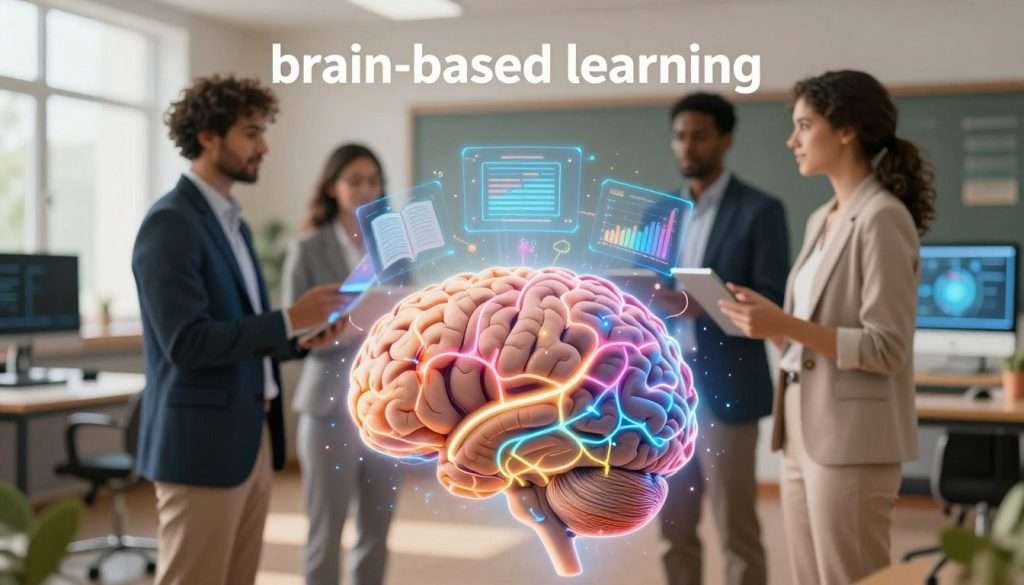
Studies say learning styles are more of a myth than fact. Instead, we should look into brain-based learning strategies. These strategies match how our brains really work.
In this article, we’ll explore the science of learning. We’ll look at the best ways to learn and remember things. By using a brain-based learning approach, you can reach your full learning potential.
Key Takeaways
- Discover why the concept of learning styles is a myth.
- Learn about the most effective brain-based learning strategies.
- Understand how to apply these strategies to improve your learning.
- Explore the science behind how our brains process information.
- Unlock your full learning potential with evidence-based techniques.
The Persistent Myth of Learning Styles
Have you been told you’re a visual or auditory learner? This idea has spread a lot in education. Many think knowing your learning style can make learning better.
The Origin and Popularity of Learning Style Theories
In the 1990s, learning styles became big thanks to Neil Fleming’s VARK questionnaire. It sorts learners into four types: Visual, Auditory, Reading/Writing, and Kinesthetic. Its simple design made it popular with teachers and students.
VARK and Other Common Learning Style Models
VARK is well-known, but other theories exist too. They suggest different learning styles. Yet, there’s no strong proof they boost learning. Still, they’re used in schools because they aim for individualized instruction.
Knowing where learning style theories come from helps us see their role in today’s education.
The Scientific Evidence Against Learning Styles
The idea of learning styles has been widely debunked by science. Many believe that people learn best in one way, like seeing, hearing, or doing. But, research shows this isn’t true.
Studies have shown that teaching in a way that matches a student’s supposed style doesn’t help them learn better. This has led to a lot of debate among teachers and researchers.
Major Studies Debunking the Theory
In 2009, Harold Pashler did a big study on this topic. He found that there’s little to no proof that teaching styles help students learn. Since then, more studies have agreed with him.
This means that learning styles don’t really predict how well someone will do in school. It’s a big blow to the idea that we should teach in ways that match each student’s style.
What Researchers Actually Discovered
Research has shown that using more than one way to learn is better. This is called multimodal learning. It helps our brains learn and remember better.
By using different senses and ways of thinking, we can learn more effectively. It’s a more natural way for our brains to process information.
The Lack of Transfer in Learning Style Interventions
One big problem with teaching based on learning styles is that it doesn’t always work. Students might do well on tests that match their style, but they don’t always do well in other areas. This shows that learning styles aren’t as useful as we thought.
We need to focus on evidence-based learning techniques. These should be based on how our brains work and how we learn best. This way, we can make learning more effective for everyone.
| Study | Findings | Implications |
|---|---|---|
| Pashler (2009) | Found no evidence supporting learning styles | Learning style interventions may not be effective |
| Nida & Kuyven (2017) | Showed multimodal learning is more effective | Engaging multiple senses enhances learning |
| Kirschner & van Merriënboer (2013) | Highlighted the importance of cognitive load management | Effective learning strategies should manage cognitive load |
By looking at the science, we can move towards better ways of learning. We can focus on how our brains actually learn, making education more effective for everyone.
How Your Brain Actually Learns
Let’s explore the amazing world of neuroscience to see how our brains learn. Knowing how our brains process information can help us study better.
The Neuroscience of Learning and Memory
Our brains are amazing organs that handle information in many ways. When we learn something new, it makes new connections between brain cells. This is called synaptic plasticity. The more we practice or remember this info, the stronger these connections get.
Studies show that our brain’s pathways can change a lot. This ability to change is key for learning and remembering. By understanding our brains, we can make our study methods better.
Why Multimodal Learning Benefits Everyone
Multimodal learning uses different senses (like sight and sound) to learn. It helps everyone because it uses different brain parts, making learning better. Research shows mixing visual, auditory, and kinesthetic learning boosts understanding and remembering.
Cognitive Load Theory and Its Implications
Cognitive load theory says our working memory can only hold so much. When learning, it’s key to manage this load to avoid overloading our brains. Breaking down hard info into smaller bits and using pictures can help.
| Learning Technique | Description | Benefit |
|---|---|---|
| Chunking | Breaking down complex info into smaller chunks | Reduces cognitive load |
| Visual Aids | Using images, diagrams, and charts | Enhances comprehension |
| Multimodal Learning | Combining visual, auditory, and kinesthetic techniques | Improves retention and recall |
By using what we know about brain learning, we can create better learning strategies. These strategies work for everyone, no matter their “learning style.”
Your Learning Style Is a Myth—Here’s What Actually Works for Every Brain
The idea that we all have a single learning style is a myth. For years, we’ve thought we’re either visual, auditory, or kinesthetic learners. But, the science just doesn’t support this.
Studies show that while we might prefer certain learning methods, sticking to one doesn’t boost our learning. In fact, limiting yourself to a single style can be detrimental. You might miss out on other strategies that could help you learn better.
The Danger of Limiting Yourself to One Style
Identifying as a certain type of learner can make you reject other methods. For example, if you think you’re a visual learner, you might ignore auditory or kinesthetic techniques. This can make you too narrow in your learning approach, which isn’t good in diverse settings.

The Benefits of Evidence-Based Learning Approaches
So, what really works? Evidence-based learning strategies are backed by science. Methods like spaced repetition, retrieval practice, and interleaving have proven to be effective. These focus on how our brains process information, not just our learning styles.
Adapting Strategies to Content, Not Personal Preference
Learning effectively means adapting your methods to the content, not just your preference. For instance, when learning a new language, mixing visual, auditory, and kinesthetic techniques can be better than one method. Being open to different approaches can maximize your learning potential.
By using evidence-based learning strategies and rejecting the myth of learning styles, you can have more effective learning. It’s time to learn what really works for every brain.
Evidence-Based Learning Strategy #1: Spaced Repetition
Discover the power of spaced repetition, a scientifically-backed learning technique. It’s changing how we study. This method uses the psychological spacing effect. It shows that learning in spaced sessions keeps information better than a single session.
How It Works
Spaced repetition reviews material at longer intervals. This helps solidify it in your long-term memory. It reduces the forgetting curve, a concept about forgetting information over time.
Digital Tools and Analog Methods
You can use spaced repetition with digital tools or analog methods. Apps like Anki and Quizlet have this feature. For a traditional way, use flashcards or a calendar-based review system.
Optimal Spacing Schedules
The best spacing schedule varies by subject. Here’s a general guide:
| Subject | Initial Review | Subsequent Reviews |
|---|---|---|
| Vocabulary | 1 day | 1 week, 1 month |
| Historical Dates | 3 days | 2 weeks, 3 months |
| Complex Concepts | 1 week | 2 weeks, 1 month, 3 months |
By adding spaced repetition to your study routine, you use an evidence-based learning technique. It boosts cognitive functions and retention.
Evidence-Based Learning Strategy #2: Retrieval Practice
Active recall is key to retrieval practice, a method that boosts learning. It involves recalling information from memory, which strengthens learning and improves retention. Scientific research supports its effectiveness in many learning settings.
The Science of Active Recall
Active recall means actively recalling past learning. It’s not just re-reading; it’s engaging with the material. This strengthens brain connections, making it easier to remember later.
The science behind active recall is rooted in cognitive psychology. Studies show it enhances long-term retention and deep understanding. By recalling information, you build a strong knowledge base.
Self-Testing Techniques That Enhance Memory
How can you add active recall to your learning? Self-testing is a great method. This means testing yourself on the material, not just re-reading it. Use flashcards, practice quizzes, or summarize in your own words.
- Create flashcards with key terms on one side and the definitions or explanations on the other.
- Develop practice quizzes to test your understanding of the material.
- Summarize the information in your own words, without looking at your notes or other resources.

Incorporating Retrieval Practice Into Study Routines
To benefit from retrieval practice, make it part of your study routine. Identify key information and plan to test yourself. Use spaced repetition to enhance its effectiveness.
By making retrieval practice a habit, you’ll retain information better and understand it deeper. It’s beneficial for students and lifelong learners alike, improving learning outcomes.
Evidence-Based Learning Strategy #3: Elaboration and Dual Coding
Learning effectively means linking new info to what you already know. Elaboration and dual coding are key strategies for this. They make your learning experience better.
Connecting New Information to Existing Knowledge
Elaboration is about linking new info to what you already know. This makes the material more meaningful. For example, when learning a new historical date, relate it to something you already know.
Combining Visual and Verbal Processing
Dual coding uses both visual and verbal learning. You can make diagrams or mind maps to help. This way, you use both sides of your brain, making learning stick better.
Creating Effective Mind Maps and Visual Notes
To make great mind maps, start with the main idea. Then add related ideas, using colors and images to remember them. Here’s a simple guide for making effective visual notes:
| Technique | Description | Benefit |
|---|---|---|
| Color Coding | Use different colors to categorize information | Enhances visual memory |
| Symbolic Representation | Use symbols and icons to represent concepts | Facilitates quick recall |
| Visual Hierarchy | Organize information from central to peripheral | Clarifies relationships between ideas |
Using elaboration and dual coding in your studies will help you learn more efficiently. You’ll remember information better.
Evidence-Based Learning Strategy #4: Interleaving and Varied Practice
Mixing up your study routine can really help. Interleaving means switching between different types of material or problems. This makes learning more challenging and effective.
Mixing Up Your Study Materials
Don’t just focus on one topic at a time. Try interleaving different subjects or types of problems. For example, in math, switch between different equations or problems. This helps you understand and apply different concepts better.
- Mix different types of problems or questions.
- Switch between different subjects or topics.
- Use a variety of study materials, such as textbooks, online resources, and practice quizzes.
The Benefits of Desirable Difficulty
Interleaving makes learning more effective by adding a sense of “desirable difficulty.” This makes it harder to recall information, which strengthens your memory over time.
Desirable difficulty enhances:
- Deeper understanding of the material.
- Better retention and recall.
- Improved ability to apply knowledge in different contexts.
Balancing Blocked and Interleaved Practice
While interleaving is great, balancing it with blocked practice is also important. Blocked practice means focusing on one topic at a time. This is good for starting out. As you get more comfortable, add interleaving to deepen your understanding.
By mixing interleaving and varied practice into your study routine, you’ll gain a deeper understanding. This leads to better retention and application of what you learn.
Personalizing Your Learning Without Learning Styles
Even though the idea of learning styles is outdated, making your learning personal is still great. You don’t have to stick to one way to learn to do well in school. Knowing how you learn and changing your method can really help.
Metacognition: Learning How You Learn
Metacognition is about understanding your own learning. It means knowing how you take in information and what works best for you. By improving your metacognitive skills, you can control and enhance your learning.
To get better at metacognition, think about your learning experiences. Ask yourself what strategies were good, what weren’t, and why. This self-awareness helps you make smart choices about how to learn.
Adapting to Different Subjects and Contexts
Each subject and learning situation needs its own approach. For example, learning a language might need lots of practice, while complex science might require breaking it down. Being open to changing your learning method is crucial.
Think about the subject and where you’re learning. Are you in class or studying alone? Adjust your learning plan as needed. This might mean using different resources, getting extra help, or changing where you study.
Creating Your Personal Learning System
Building a personal learning system means using strategies that work for you and adapting to different situations. It’s about making a learning plan that fits your needs. Start by figuring out what works best for you, then build on that.
By personalizing your learning, you’re not stuck with one style. You can try different approaches and make sure your learning is effective.
Conclusion: Building a Flexible Learning Toolkit
We’ve shown that one learning style can’t define how you learn. Your brain does best with a variety of learning strategies. These strategies, like spaced repetition and retrieval practice, help you learn in different ways.
These effective learning strategies help you understand, not just memorize. They use science to improve how you learn. So, it’s time to move past the idea of just one learning style and start building a flexible toolkit.
Exploring these methods will show you that your learning style is a myth—here’s what actually works for every brain. With time and effort, you’ll become more confident and effective in learning. You’ll be ready for any challenge.