

Have you ever wondered why some people pick up new skills quickly, while others take years? We often think talent is the key, but it’s actually more empowering. Mastering any skill is more about how you train than natural talent.
Many of us just repeat tasks, hoping to get better. But real growth comes from changing how we think. We must move past simple repetition and use effective practice methods. These methods make every practice session a step towards being the best.
In this guide, we’ll dive into the science of learning new skills. We’ll show you how to practice effectively for just about anything. You’ll learn to focus on effort, not just time. Get ready to make learning fun and productive!
Key Takeaways
- Mastery is built through focused effort, not just mindless repetition.
- Effective training helps you perform with greater speed and confidence.
- Moving away from passive habits accelerates your learning curve.
- Small, intentional adjustments lead to significant long-term gains.
- Learning becomes an enjoyable process when you use the right strategies.
The Science of Skill Acquisition and Deliberate Practice
Getting better at something takes more than just time. It’s about knowing how skills grow. You’ll learn how your brain changes and why some ways of practicing work better.
Understanding the Neuroplasticity of Learning
Our brains can change a lot, thanks to neuroplasticity. Annie Bosler and Don Greene have shown how practice shapes our brains. When we learn something new, our brain cells connect in new ways.
With more practice, these connections get stronger. This is called myelination. It helps us do things better and faster over time.
The Difference Between Passive Repetition and Deliberate Practice
Not all practice is the same. Deliberate practice is focused and aimed at improving specific skills. It’s different from just doing something over and over without thinking.
To practice well, you need to know what you’re working on. Break down hard skills into smaller parts. Set clear goals and ask for feedback. This way, you can learn faster and better.
Knowing how skills grow and using deliberate practice strategies can help you reach your goals. It doesn’t matter if you’re getting better at work or a new hobby. The right practice makes a big difference.
Defining Your Learning Objectives and Goals
To learn well, you must know what you aim to achieve. Setting clear goals is key to your learning journey. It’s about knowing what you want to get out of it and how to get there.
Breaking Down Complex Skills into Micro-Skills
Complex skills can feel too big to tackle. But breaking them down into smaller parts makes them easier. For example, learning to play the guitar can be broken into tuning, learning chords, and practicing strumming.
This method makes learning less scary. It lets you focus on one thing at a time. This makes progress feel real and keeps you motivated.
Setting SMART Goals for Skill Mastery
After breaking down skills, set SMART (Specific, Measurable, Achievable, Relevant, Time-bound) goals. SMART goals give you a clear path to follow.
For instance, instead of saying “I want to get better at guitar,” aim for “I will practice guitar for 15 minutes, 3 times a week, for 3 months to learn 5 new chords.”
Example of SMART Goal Setting:
| Goal Component | Example | Explanation |
|---|---|---|
| Specific | Learn 5 new guitar chords | Clearly defines what you want to achieve. |
| Measurable | Practice for 15 minutes, 3 times a week | Quantifies the goal so progress can be tracked. |
| Achievable | 3 times a week for 3 months | Ensures the goal is realistic based on your schedule. |
| Relevant | Improves guitar playing skills | Aligns with your broader learning objectives. |
| Time-bound | For the next 3 months | Sets a specific timeframe for achieving the goal. |
Dr. Maxwell Maltz found it takes at least 21 days to form new habits. Setting time-bound goals helps make learning a habit. By sticking to a schedule, you’re more likely to keep learning.
Creating an Optimal Environment for Focused Work
Your surroundings greatly affect your ability to focus and learn. When trying to improve performance through practice, the environment matters a lot. It’s as important as the practice itself.
To make a space good for focused work, think about two things: getting rid of distractions and having a dedicated area. Let’s look at each to improve your practice sessions.
Eliminating Cognitive Distractions
Cognitive distractions are things in your environment that take your attention away. These can be simple, like social media alerts or email notifications. Or even clutter on your desk. To cut down on distractions:
- Turn off phone notifications or put it on silent.
- Use website blockers like Freedom or SelfControl to block distracting sites.
- Clear your desk of anything you don’t need.
By reducing these distractions, you can focus better. This helps you improve your skill-building techniques.
Designing a Dedicated Practice Space
A dedicated practice space is key for learning well. It should be comfortable and help you avoid getting tired. Here are some tips to make such a space:
- Find a quiet, comfy spot with good light.
- Get a comfy chair and a desk at the right height.
- Keep the space tidy and organized.
Having a special area for practice tells your brain it’s time to focus. This makes it easier to get into a productive mindset. It’s a big part of skill-building techniques that can really help you grow.
How to Practice Effectively for Just About Anything Using Feedback Loops
To improve, add feedback loops to your practice. Feedback is key for growth. It makes good practice great. Elite violinists found that getting feedback during practice was crucial.
Feedback loops help you spot and fix mistakes. Without them, you practice blindly, unaware of errors.
The Importance of Immediate Corrective Feedback
Immediate feedback is crucial. It lets you fix mistakes right away. This stops bad habits from forming.
“The most effective practice is that which is informed by feedback, and the most effective feedback is that which is immediate.”
This quick feedback solidifies correct skills. It’s a key part of learning.
To use feedback well, focus on specific areas. For example, record yourself playing music. Then, listen to find what needs work. This targeted practice is more effective.
Utilizing Video and Audio Recording for Self-Assessment
Recording yourself is a great way to assess your practice. It lets you see mistakes and track progress. This is great for skills like sports, dance, or public speaking.
Many athletes use video to improve. They spot small flaws and tweak their technique. You can do the same with audio for skills like singing or playing an instrument.
Seeking Mentorship and Expert Critique
Self-assessment is good, but expert feedback is better. A coach or mentor can offer personalized advice. They point out areas you might miss and guide you on how to improve.
Elite performers often have coaches. This feedback is invaluable. It comes from their experience. Seeking mentorship can speed up your improvement.
In summary, feedback loops are vital for effective practice. Immediate feedback, self-assessment with recordings, and expert advice all help. They make your practice sessions more productive and goal-oriented.
Implementing Spaced Repetition and Interleaving Techniques
To improve your learning, it’s key to use advanced techniques. We’ve covered the basics of deliberate practice. Now, let’s explore spaced repetition and interleaving to boost your learning.
These methods have been studied by scientists. They help you practice better and retain information longer. This makes your learning more effective.
Optimizing Retention with Spaced Repetition Systems
Spaced repetition reviews material at longer intervals to solidify it in your memory. It uses the psychological spacing effect. This shows spaced learning is better than single-session learning.
To use spaced repetition, tools and apps can help. Create flashcards with key terms and their meanings. Review them at longer intervals to reinforce your learning.
| Day | Review Material | Interval |
|---|---|---|
| 1 | Initial Learning | – |
| 3 | First Review | 2 days |
| 7 | Second Review | 4 days |
| 14 | Third Review | 7 days |
Mixing Skills to Enhance Cognitive Flexibility
Interleaving mixes different types of material or problems. This deepens your understanding and improves application. It challenges your brain to adapt and connect different information.
For example, learning a new language? Mix grammar, vocabulary, and pronunciation. This approach enhances your language skills and flexibility.
Using spaced repetition and interleaving can elevate your learning. You’ll master skills more effectively.
Managing Cognitive Load and Preventing Burnout
As you dive deeper into your practice routine, managing your cognitive load becomes crucial to avoid burnout and maintain peak performance. When you’re learning something new or working on a complex task, your brain is under a lot of stress. This stress can lead to mental fatigue, decreased motivation, and a drop in performance.
Understanding Cognitive Load is essential to managing it effectively. Cognitive load refers to the amount of mental effort being used in the working memory. When the load is too high, it can impede learning and performance. By balancing your practice sessions and incorporating rest, you can optimize your cognitive load and improve your skill-building techniques.
The Role of Rest in Memory Consolidation
Rest is not just a passive state; it’s an active process that plays a critical role in memory consolidation. During rest, your brain processes and strengthens the connections between neurons, transferring information from short-term to long-term memory. This process is vital for improving performance through practice.
Research has shown that rest and sleep are crucial for memory consolidation. When you practice a new skill, you’re not just improving during the practice session itself, but also during the rest periods that follow. This is because rest allows your brain to replay and refine the neural pathways associated with the skill.
| Rest Type | Duration | Benefits |
|---|---|---|
| Short Breaks | 5-10 minutes | Reduces mental fatigue, improves focus |
| Long Breaks | 30-60 minutes | Enhances memory consolidation, boosts creativity |
| Sleep | 7-9 hours | Strengthens neural connections, improves skill retention |
Applying the Pomodoro Technique for Sustained Focus
The Pomodoro Technique is a time management method that can help you stay focused and avoid burnout. The technique involves working in focused, 25-minute increments, followed by a 5-minute break. After four cycles, you take a longer break of 15-30 minutes.
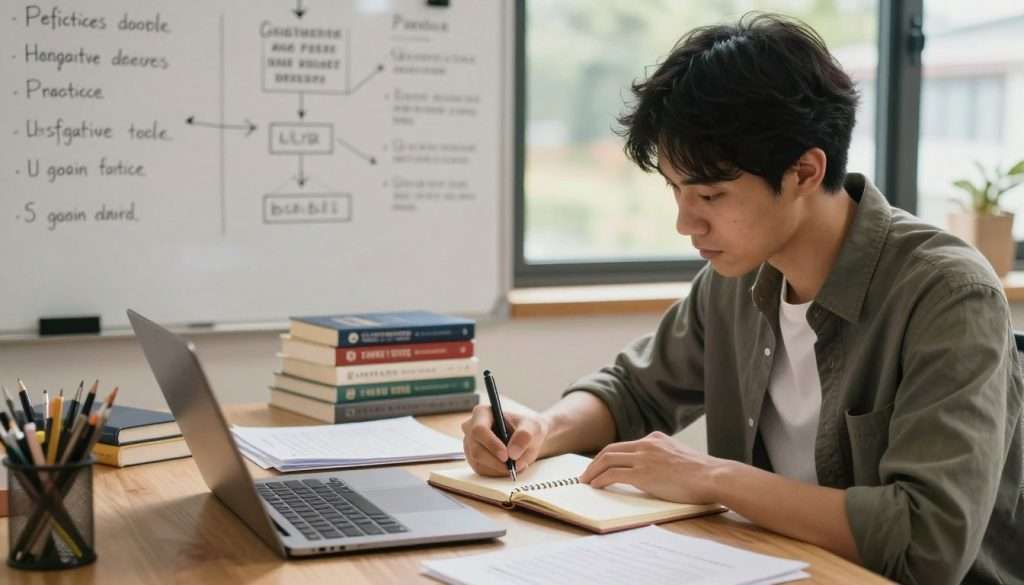
This technique can be very useful for skill-building activities. It allows you to maintain a high level of focus while also giving your brain regular breaks to rest and recover. By incorporating the Pomodoro Technique into your practice routine, you can improve your ability to sustain focus and make steady progress towards your goals.
By managing your cognitive load and incorporating rest into your practice routine, you can improve your performance and achieve your goals more efficiently. Remember, effective practice is not just about the quantity of time you spend practicing, but also about the quality of that practice.
Overcoming Plateaus and Maintaining Motivation
Reaching a plateau is a normal part of learning. It doesn’t mean you’ve failed. We’ve all hit a wall where progress seems to stop. But it’s not a sign of failure.
Identifying the Causes of Skill Plateaus
There are many reasons for hitting a plateau. Sometimes, you’ve reached the limits of your current practice. Other times, it’s because you lack feedback or guidance. Anders Ericsson’s concept of 10,000 hours of practice to achieve mastery is well-known. But it’s not just about time – it’s about practicing well.
| Cause | Description |
|---|---|
| Lack of Feedback | Without feedback, you can’t identify areas for improvement. |
| Insufficient Challenge | If you’re not challenging yourself, you won’t progress. |
| Poor Practice Techniques | Ineffective practice methods can lead to stagnation. |
Strategies for Pushing Through the Learning Dip
So, how do you overcome a plateau? First, find out why you hit it. Then, try a few strategies to get moving again. Here are some effective methods:
- Change Your Practice Routine: Mix things up to keep your practice sessions engaging and challenging.
- Seek Feedback: Get feedback from a mentor, coach, or peer to identify areas for improvement.
- Set New Goals: Setting new, challenging goals can help you stay motivated and focused.
By understanding the causes of plateaus and using the right strategies, you can overcome them. This way, you can keep making progress in mastering new skills.
Advanced Techniques for Deep Skill Integration
Now, let’s explore advanced techniques for deep skill integration. To master a skill, you need to use complex strategies in your practice.
Daniel Coyle’s research showed how the brain learns new skills. By using these insights, you can improve your learning.
Visualization and Mental Rehearsal Strategies
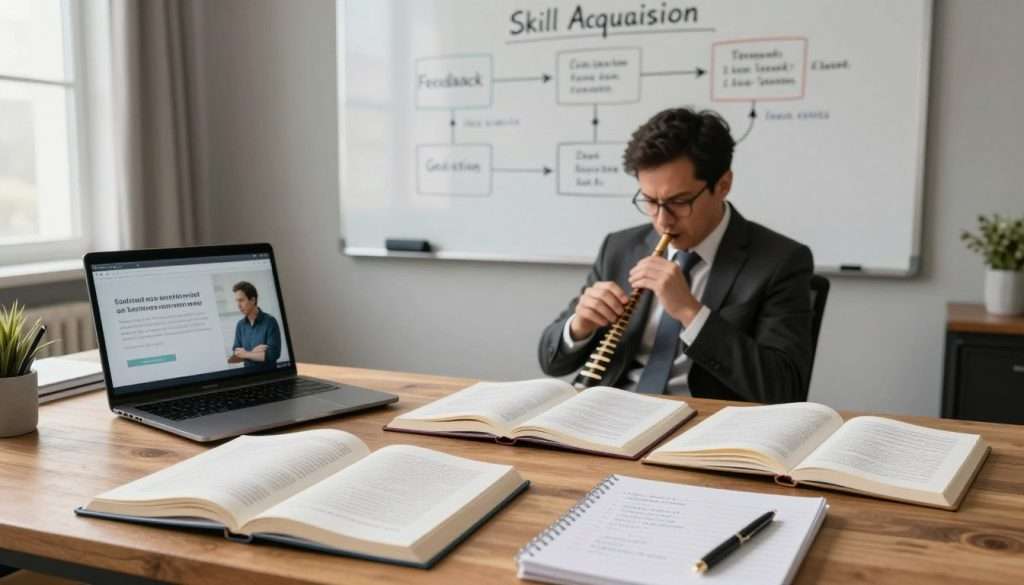
Visualization is a powerful tool for perfecting skills mentally. Imagine yourself doing a task to strengthen your neural pathways.
Key benefits of visualization include:
- Improved performance under pressure
- Enhanced muscle memory
- Better focus and concentration
Teaching Others to Solidify Your Own Understanding
Teaching others solidifies your own knowledge. Explaining concepts to someone else makes you retain information better and spot areas for more practice.
| Benefits of Teaching Others | Description |
|---|---|
| Improved retention | Teaching others helps you retain information better |
| Deeper understanding | Explaining concepts to others deepens your own understanding |
| Identifying knowledge gaps | Teaching others reveals areas where you need more practice |
By using these advanced techniques, you can integrate skills deeply and become a true master.
Conclusion
Practicing effectively is a skill you can learn. It involves understanding how skills are developed and using strategies like deliberate practice. This helps improve your learning and growth.
We talked about setting clear goals and creating the best environment for learning. Managing your mental workload is also crucial to avoid burnout. Using these methods will help you master new skills and reach your goals.
It’s now your turn to apply these strategies. Being consistent, persistent, and patient is key to improving. With effort, you can get better at almost anything. So, what skill will you start practicing today?