

Have you ever walked into a room and forgotten why you were there? We have all done it, staring at a wall as our brains search for a clue. It is frustrating, but your brain can perform amazing feats with the right map.
The memory palace technique stores information by linking facts to familiar places. Rather than repeat facts, you use natural spatial awareness to keep details in place. This method turns your mind into an organized library, so you can find what you need.
With vivid mental images, you can remember anything, from grocery lists to complex exam topics. This method of loci is a game-changer for anyone seeking real memory improvement.
If you want to learn more, my free book How to Become the Smartest Student in the Classroom offers a full system. It includes study routines and strategies that stick. Grab your free copy here.
Key Takeaways
- The method of loci uses spatial visualization to boost recall.
- You can transform your home into a mental storage space.
- Vivid, strange images help your brain hold onto facts longer.
- This strategy replaces rote memorization with active engagement.
- Consistent practice makes retrieving information feel like second nature.
What the Memory Palace Technique Is and When to Use It
Imagine walking through your childhood home and finding information in every corner. This is the core of the memory palace technique, used for thousands of years. Ancient thinkers like Simonides of Ceos, Cicero, and Quintilian used it to give long, complex speeches without notes.
By turning your mental space into a storage unit, you organize facts in a natural, intuitive way. It does not require a “photographic memory”; it uses your brain’s natural skill for navigating physical environments.
How a familiar place becomes a mind palace
Your brain remembers where you left your keys and how to navigate your commute. A mind palace uses this spatial memory. Choose a familiar place—your apartment, school, or favorite park—and assign facts to spots along a path.
“The art of memory is like a storehouse; once you organize your items, you can retrieve them whenever you need them.”
To recall information, mentally walk through that space. Since the layout is already familiar, the items appear where you left them.
Information the technique can help you remember
You may wonder whether it works for everything. This versatile method works for almost any type of data, especially:
- Vocabulary lists and foreign language phrases.
- Complex concepts or historical dates.
- Step-by-step instructions for work or school projects.
- Names of people you meet at a networking event.
To explore these strategies, my free book, How to Become the Smartest Student in the Classroom, offers a complete system for mastering these skills. You can grab your free copy here.
When visual mnemonics work better than repetition
Rote repetition is often boring and rarely supports long-term retention. Mnemonics, especially visual ones, engage more brain areas than simple reading. When you create a vivid, strange, or funny image in your mind palace, your brain remembers it better.
This approach works best when you need to remember things in a specific order. While repetition fades quickly, a well-built memory palace technique creates a lasting mental map for weeks or months.
Why the Memory Palace Technique Improves Recall
Our brains are built to navigate spaces, which makes this method useful for memory improvement. We often forget abstract lists, but we remember where objects sit in a room. This advantage turns facts into a clear journey.
How spatial memory gives information an organized structure
Your hippocampus works like a mental GPS and maps your surroundings. When you use spatial memory, you give your brain a filing system it already understands. Instead of memorizing random facts, place them along a familiar path.
This creates a clear sequence and keeps information from getting mixed up. Each item has a fixed home, so you can recall the list’s middle.
Why unusual images are easier to retrieve than abstract facts
Abstract words can slip away, but the brain notices strange, vivid things. Replace a dull fact with a bizarre, colorful image, and you create a stronger mental hook. This key part of effective memory techniques helps you recall complex data quickly.
Think of it as turning a dry textbook into a movie scene. Your brain overlooks ordinary details but remembers unusual ones. That makes this method useful for cognitive enhancement.
How movement through a location creates reliable recall cues
When you mentally walk through a room, you engage your brain’s navigation systems. This movement creates triggers that bring information from long-term storage. A consistent direction keeps recall smooth and predictable.
Using emotion, humor, size, color, and motion to strengthen associations
To make these images stick, give them personality. A tiny, gray, static object is easy to forget, but a giant, neon-colored, dancing object is hard to ignore. Humor or strong emotion can make the memory even stronger.
| Feature | Standard Rote Learning | Spatial Memory Palace |
|---|---|---|
| Structure | Linear and fragile | Organized and robust |
| Engagement | Low (passive reading) | High (active visualization) |
| Recall Speed | Slow and prone to error | Fast and reliable |
| Cognitive Load | High mental strain | Low, natural processing |
If this helped, explore my free book How to Become the Smartest Student in the Classroom for a full system. It covers memory techniques, study routines, and strategies that actually stick. No cost, no catch—grab your free copy here.
Choose and Prepare a Reliable Memory Palace
You don’t need a huge mansion to master memorization. The best tools are often places you visit every day.
Choose a space you know well to give your brain a strong foundation. Then, focus on the information instead of imagining the room.
Selecting a familiar location with a clear layout
Your mind palace should be easy to navigate in your thoughts. A clear layout helps keep your facts in order.
Choose a place with separate rooms or clear paths. If you can walk through it from front to back without getting lost, it works well.
Comparing a home, commute, classroom, workplace, and imagined setting
Different locations fit different learning needs. Choose a place based on the type of information you need to remember:
- Your Home: Perfect for beginners because you know every corner by heart.
- Daily Commute: Great for long sequences of information that follow a linear path.
- Classroom or Workplace: Ideal for subject-specific data that relates to your professional or academic life.
- Imagined Settings: Useful for advanced users, though they require more effort to build.
Choosing a palace that matches the amount of information
Not every project needs a large, complex structure. Match your location’s size to the amount of information you must remember.
A single room or small apartment can hold a short list. As your skills grow, expand to larger buildings or multiple palaces. My free book, How to Become the Smartest Student in the Classroom, offers a complete guide to study routines that stick. You can grab your free copy here.
Why familiar locations are usually better than complicated fantasy worlds
A grand, magical castle may seem exciting for your memorization needs. Yet fantasy worlds often take too much mental energy to maintain.
Your brain already stores the map of a real place. This leaves more energy for creative links that help facts stick.
Removing confusing details before memorization begins
Before placing information, clear your mental space. A busy room can cause confusion during recall.
Remove extra objects and distractions from your image. A simple mind palace gives each fact its own place and supports reliable recall.
Build a Fixed Route Through Your Memory Palace
A fixed route makes your memory palace technique work better. Without a clear path, your brain may struggle to find stored information. Imagine a mental map you can follow with your eyes closed.
Step 1: Identify the starting point
Choose an entrance or a specific corner of your room as your starting point. This anchor helps you begin in the same spot each time you enter your palace.
Step 2: Mark distinct stopping points in a consistent order
Choose clear, memorable “stations” where your information will live. Group them into zones, with five stopping points per zone as a strong starting framework. This approach keeps your mental load manageable and organized.
“The secret of getting ahead is getting started. The secret of getting started is breaking your complex overwhelming tasks into small manageable tasks, then starting on the first one.”
Step 3: Keep the route moving in one direction
Always move one way, such as clockwise around a room, to avoid confusion. Jumping from the kitchen to the bedroom and back to the hallway can confuse your brain. It may lose the thread of your memory palace technique.
Step 4: Test the route without adding information
Before memorizing a single fact, walk through your route mentally several times. Practice moving forward and backward through your stations. This test shows whether your path feels natural or creates a mental dead end.
Preventing skipped locations, duplicated stops, and backtracking
If you skip a spot or visit one twice, stop and adjust your layout; fixing it now is easier than struggling later. My free book, How to Become the Smartest Student in the Classroom, offers memory techniques, study routines, and strategies that stick. It gives you a full system at no cost, with no catch; grab your free copy here.
Create Vivid Associations That Make Facts Stick
Your memory palace stays empty until you fill it with vivid, wild, unforgettable scenes. To master memorization, stop thinking in words and start thinking in pictures. Your brain remembers stories and sensory details better than dry text.
Step 1: Convert each fact into a concrete image
Abstract concepts are slippery, so anchor them to something physical. To remember buying milk, do not picture only the word “milk.” Imagine a giant carton overflowing across your kitchen floor.
Step 2: Make the image exaggerated, active, and unusual
Boring images fade, but bizarre ones stick. Make your scenes larger than life, loud, or even a little gross. To remember a historical date, picture its numbers dancing in costumes or exploding like fireworks.
Step 3: Attach one idea to one location
Keep your mental house tidy by assigning one core idea to each spot. If you crowd concepts into one corner, your mnemonics become a tangled mess. Clear locations support successful recall.
Step 4: Connect the image to the location through interaction
Do not simply place an object in a room; make it interact with the furniture. To remember a definition, imagine painting it onto your sofa. The more senses you use—smell, touch, and sound—the stronger your memory becomes.
Turning names, dates, numbers, and definitions into memorable scenes
You can turn almost anything into a scene. To remember renting a movie, imagine Spider-Man hanging from your ceiling fan with a DVD. Active characters turn a simple chore into a tiny, memorable movie.
Using sound-alike cues without creating confusing images
Sometimes, use words that sound like the information you need. To learn a vocabulary word, find a similar-sounding word and build a scene around it. Keep the connection clear so you do not get lost in your mental maze.
| Concept | Boring Method | Vivid Mnemonic |
|---|---|---|
| Historical Date | Reading the year repeatedly | Exploding fireworks in the shape of the year |
| Grocery List | Writing it on a notepad | A giant banana juggling eggs in your hallway |
| Vocabulary Word | Looking at a dictionary | A funny character acting out the word’s meaning |
If this article resonated with you, my free book How to Become the Smartest Student in the Classroom offers a full system. It includes memory techniques, study routines, and strategies that actually stick. There is no cost or catch. Grab your free copy here → https://www.studyingmachine.com/free-books/.
Memory Palace Technique: How to Use It to Remember Anything
This seven-step guide shows you how to build your own mind palace and unlock your brain’s potential. With a steady routine, you can turn any familiar space into a powerful tool for storage and retrieval.

Step 1: Define the information you need to recall
Before you start, define what you want to learn. Whether you study a list of facts or a complex concept, a clear goal keeps your focus sharp.
Step 2: Divide the material into a short sequence
Break information into small, manageable chunks. This keeps your brain from feeling overwhelmed and makes encoding much smoother.
Step 3: Translate each item into a striking mnemonic image
Your brain loves vivid, unusual, and exaggerated pictures. Instead of memorizing abstract words, create a funny or shocking mental movie about each item.
Step 4: Place each image along the route
Walk through your chosen location and “deposit” your images at specific spots. Anchoring images to physical objects creates a permanent link in your memory.
Step 5: Walk through the palace mentally in order
Take a quiet moment to picture your path. Move from one point to the next and check that each image remains clear.
Step 6: Recall the material backward and from random locations
To truly master the memory palace technique, test your retrieval. Jump to the middle of your route or walk it in reverse to prove the information is locked in.
Step 7: Rebuild weak images instead of repeatedly rereading
If you forget an item, do not simply read it again. Instead, rebuild the image to make it more intense or humorous. This strengthens the neural connection far better than passive review.
Worked example: memorizing a grocery list with a kitchen route
Imagine walking into your kitchen. Place a giant, dripping carton of milk on the stove, then see a massive, dancing bunch of bananas on the counter. By the time you reach the fridge, your boring list has become a memorable scene that is hard to forget.
Worked example: remembering a speech outline with rooms in a home
For a speech, assign one main point to each room in your house. The introduction happens at the front door, while your conclusion takes place in the bedroom. This spatial organization helps you remember anything with total confidence.
| Method | Best For | Effort Level |
|---|---|---|
| Rote Repetition | Short-term facts | High |
| Mind Palace | Complex sequences | Medium |
| Flashcards | Vocabulary | Low |
If this article resonated with you, try my free book How to Become the Smartest Student in the Classroom. It covers memory techniques, study routines, and strategies that actually stick. It costs nothing, with no catch. Grab your free copy here → https://www.studyingmachine.com/free-books/.
Apply the Technique to School, Work, and Everyday Information
We want to show you how everyday spaces can support cognitive enhancement. You do not need to be a genius to learn these skills. You need practice and a familiar space.
Remembering vocabulary, concepts, and exam material
Students often struggle to memorize long lists of definitions and historical dates. Place these facts in a familiar room instead of staring at a textbook for hours. Visualizing a giant, glowing atom in your kitchen can help a chemistry concept stick better than reading it.
Organizing presentations, meetings, and talking points
For a big presentation, map your talking points to furniture in your office. As you mentally walk from your desk to the door, meet each key point in order. This keeps your delivery smooth and reduces your need for messy notes.
Memorizing names, errands, lists, and travel details
We all forget the milk or a new acquaintance’s name. With mnemonics, attach a person’s name to a facial feature or landmark in your home. This turns ordinary tasks into a fun mental game and keeps your brain sharp.
Combining the memory palace with spaced repetition and active recall
Make your memory techniques last by pairing them with active recall. Instead of viewing your images, recreate them from memory at longer intervals. This habit moves information from short-term memory into long-term storage.
- Review your palace one hour after creating it.
- Check it again the next day.
- Test yourself once a week to keep the connections strong.
Using separate palaces for unrelated subjects
Keep subjects organized by using different locations for different topics. Use your childhood home for history dates and your current office for work projects. This keeps your brain from mixing facts and makes mental files easy to find.
If this article resonated with you, my free book How to Become the Smartest Student in the Classroom offers a full system. It includes memory techniques, study routines, and strategies that actually stick. The book is free, with no catch, so grab your free copy here → https://www.studyingmachine.com/free-books/.
Strengthen Recall and Fix Common Memory Palace Problems
Even the best memory systems can hit bumps. If mental images fade or your path gets messy, do not worry. Troubleshooting is a natural part of effective memory improvement.
Reviewing at the right intervals after the first encoding
Your brain needs a small nudge to keep information fresh. Review your palace after building it, then review it again the next day. Spaced repetition helps your memorization efforts last.
What to do when two images blend together
If two items look like one, they are likely too similar. Make them distinct by changing their size, color, or actions. Give each image a unique personality so it stops competing for attention.
What to do when a location feels empty or hard to visualize
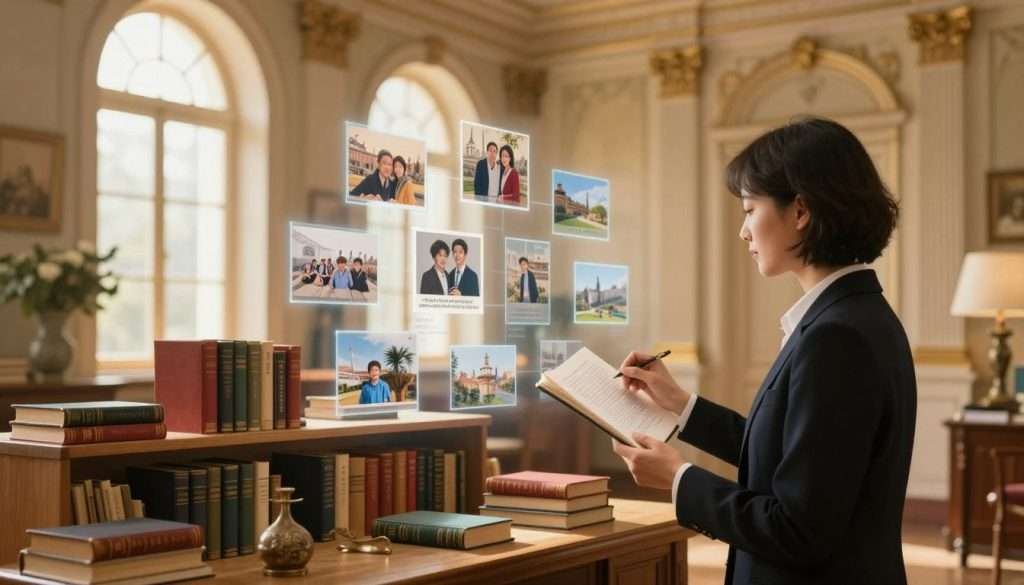
Sometimes a spot in your house feels dull. If you cannot “see” it clearly, choose a place you know better, like your favorite coffee shop or a park. A vivid, familiar setting builds a strong palace.
What to do when the route is too long
A route that drags on can become tiring. If you feel lost, break the path into smaller, manageable segments. Treat each room as a mini-palace to keep focus sharp and recall fast.
Recovering an item when one image is forgotten
If you draw a blank, do not reread the source material. Instead, rebuild the image from scratch with more intense details.
Replacing vague images with distinctive actions and sensory details
Make your images loud, smelly, or physically impossible. If you need to remember a historical date, imagine it painted in neon colors on your front door. The more sensory input you add, the harder it is for your brain to ignore the fact.
Avoiding common mistakes that weaken memorization
It is easy to make mistakes that waste your hard work. Keep these rules in mind to stay on track.
Do not overload one location with multiple unrelated facts
One location should hold one primary image. If you cram too much into one spot, your brain may struggle to unpack the information later.
Do not change the route while learning the material
Consistency is key. Once you set your path, stick to it until you master the information. Changing the order mid-stream can cause confusion.
Do not confuse recognition with independent recall
Recognizing a fact does not prove you have mastered it. Test yourself by recalling information without looking at your notes.
For deeper study, my free book How to Become the Smartest Student in the Classroom gives you a full system. It covers memory techniques, study routines, and strategies that actually stick. It costs nothing, so grab your free copy here.
| Problem | Quick Fix | Goal |
|---|---|---|
| Blended Images | Add unique sensory details | Clarity |
| Empty Locations | Switch to a familiar setting | Visualization |
| Forgotten Items | Rebuild with exaggerated action | Retention |
| Route Confusion | Break into smaller segments | Organization |
Conclusion
You now have the keys to turn any familiar space into a powerful learning tool. The memory palace technique turns abstract facts into vivid stories that stay in your brain for years.
Start small today by choosing one room in your house. Put just three items there, then test how easily you can remember anything for your next exam or meeting. Regular practice makes these memory techniques a natural habit and saves hours of mindless repetition.
You can take your learning even further with my free book, How to Become the Smartest Student in the Classroom. You will find complete study routines and proven methods that actually work. Grab your free copy here at https://www.studyingmachine.com/free-books/ to start your journey toward effortless recall.