

Ever wondered why some pick up new skills fast, while others take ages? It’s not just about being smart. It’s about how you learn. Welcome to our space, where learning becomes a real adventure.
We aim to make learning easy and fun. No more feeling stuck. Our effortless learning resources help you grasp tough topics with ease.
Learning should be a journey, not a chore. We’ll show you simple ways to reach your goals. It’s time to grow effortlessly, not struggle.
Key Takeaways
- Shift your mindset from struggle to natural flow.
- Implement smart study techniques for better retention.
- Access curated tools that simplify complex subjects.
- Save valuable time by optimizing your daily routine.
- Enjoy the process of growth every single day.
The Philosophy of Effortless Education
At the heart of breezy learning is a simple yet profound philosophy. It’s about making education feel effortless. This isn’t about dumbing down content or avoiding challenges. It’s about creating an engaging education experience that fits how our brains naturally learn.
We believe traditional learning methods often forget to make learning enjoyable. By changing how we approach education, we can make it feel like a breeze.
Redefining the Traditional Learning Mindset
The traditional learning mindset often sees education as a chore. It requires a lot of effort and dedication. But what if we told you that learning can be effortless and enjoyable? By using easy learning techniques, you can change your educational journey.
- Embracing a growth mindset that welcomes challenges as opportunities for growth.
- Focusing on the process, not just the outcome, to enjoy the learning journey.
- Using techniques that make learning feel less like work and more like play.
The Science Behind Cognitive Ease
Cognitive ease is when our brains process information with minimal effort. Research shows that when learning feels easy, we’re more likely to retain information and stay motivated. Here are some key factors that contribute to cognitive ease:
- Clear and concise information presentation.
- A distraction-free learning environment.
- Breaking down complex topics into manageable chunks.
By understanding and applying these principles, you can create an educational experience that’s not only effective but also enjoyable. At Breezy Learning, we’re committed to helping you achieve just that.
Make learning feel like a breeze with Micro-Learning
Micro-learning breaks down big topics into small pieces. This makes learning easy and fun. It’s all about making education simple and enjoyable.
Breaking Down Complex Subjects into Manageable Chunks
Micro-learning turns big subjects into smaller parts. This means breaking a long topic into short lessons. Each lesson focuses on one thing.
This way, you can avoid feeling overwhelmed. You can learn better because it’s not too much at once.
For example, learning a new language is easier when you focus on one rule at a time. This step-by-step approach makes learning feel like a smooth journey.
The Power of Spaced Repetition in Short Bursts
Spaced repetition is a big part of micro-learning. It means reviewing material at longer intervals. This helps you remember it better.
For example, you might look at a new concept one day, then a week later, and again after a month. This strategic spacing keeps the information in your memory.
Using micro-learning and spaced repetition together makes learning easy and fun. This method makes learning simple and effective. It helps you reach your educational goals easily.
Optimizing Your Environment for Seamless Learning
To start a convenient learning journey, you need to set up your learning space right. Your environment greatly affects how well you learn and remember things. A well-thought-out learning area can help you focus better, work more efficiently, and enjoy learning more.
Designing a Distraction-Free Workspace
A messy and noisy area can really get in the way of learning. To make a quiet study space, clean up your area first. Get rid of anything that might distract you. You might want to use a noise-cancelling headset or some soft music to help.
Key Elements of a Distraction-Free Workspace:
| Element | Description | Benefit |
|---|---|---|
| Clutter-Free Area | Remove unnecessary items from your study space | Improved focus |
| Noise Control | Use noise-cancelling headsets or calming music | Reduced distractions |
| Good Lighting | Ensure sufficient and comfortable lighting | Reduced eye strain |
Leveraging Sensory Cues for Better Focus
Sensory cues can really help you stay focused. Scents, colors, and textures can make learning better. For example, lavender can help you relax, and a bright room can keep you alert.
Try incorporating sensory cues into your learning environment:
- Aromatherapy with essential oils like peppermint or lavender
- Using colored stationery or highlighters to add visual interest
- Incorporating comfortable textures, such as a plush chair or a weighted blanket
By making your environment perfect for learning, you can create a space that helps you reach your goals. Remember, the right surroundings are key to a convenient learning approach.
Active Recall Techniques for Faster Retention
Active recall is a game-changer for learning. It makes you actively engage with what you’re trying to learn. This strengthens your brain’s ability to recall information when needed.
To switch from passive to active learning, understand that active recall is more than just re-reading notes. It’s about recalling information from memory without looking at resources.
Moving Beyond Passive Reading
Many learners get stuck in passive reading. They highlight and re-read, thinking it’s enough. But this method doesn’t fully engage your brain.
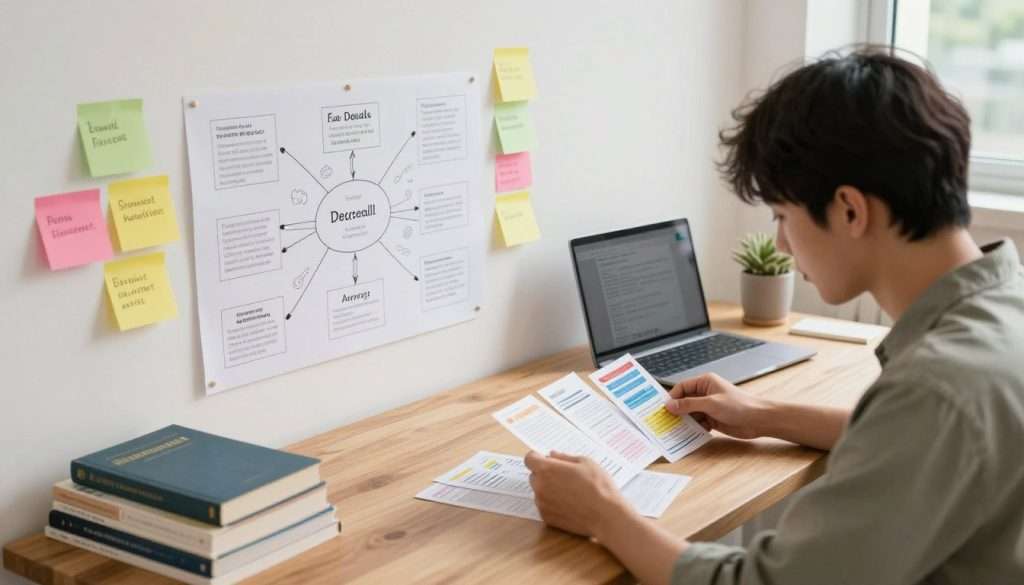
To break free, try summarizing in your own words or making concept maps. These connect new info to what you already know.
Another good strategy is to turn headings into questions. For example, “What are the benefits of active recall?” Try answering without looking back at the text.
Implementing Self-Testing Strategies
Self-testing is a key active recall technique. It involves testing yourself on what you’re learning. Use flashcards, practice quizzes, or create your own questions.
Flashcards with spaced repetition are effective. Review them at longer intervals to solidify info in your long-term memory. Apps and online tools can make this easier.
Teaching what you’ve learned to someone else is also helpful. It forces you to recall and explain information clearly. This strengthens your own understanding and retention.
By using these active recall techniques, you’ll improve retention and make learning more engaging. It’s a step towards effortless education.
The Role of Curiosity in an Enjoyable Learning Journey
The key to a great engaging education experience is curiosity. When we’re curious, we want to learn more. This makes learning feel like a fun journey, not a task.
Connecting New Information to Existing Interests
Keeping curiosity alive means linking new stuff to what you already love. For instance, if you love music, learn how math like rhythm and frequency work in your favorite songs. This makes learning more fun and meaningful.
By making new info connect to your interests, you build a personal and wide web of knowledge. This not only deepens your understanding but also keeps you interested. You see how what you’re learning applies to your life.
Cultivating a Growth Mindset for Long-Term Success
Having a growth mindset is key to keeping curiosity alive. It means you believe you can get better with effort and hard work. With this mindset, you’re ready to tackle challenges and learn from failures.
To grow your mindset, focus on the journey of learning, not just the end result. Celebrate your efforts, learn from mistakes, and stay open to new things. This way, you’ll keep your curiosity and love for learning alive forever.
By using these tips, you’ll make your learning experience engaging and fulfilling.
Simplified Learning Methods for Complex Topics
We’ve all faced complex topics at some point. But, there’s a way to make them simpler. Learning complex subjects doesn’t have to be hard. With the right methods, you can break down tough concepts into smaller parts.
Complex topics can scare learners, but simplified learning methods can help. By using the right techniques, you can better understand and remember complex info.
Using Analogies to Bridge Knowledge Gaps
Analogies are great for learning complex topics. They compare unfamiliar concepts to things you already know. For example, explaining a computer by comparing it to a filing system can help you understand it better.
To create analogies, find the key parts of the complex topic. Then, look for similar things you already know. This helps connect what you know to what you’re learning.

The Feynman Technique for Conceptual Clarity
The Feynman Technique is named after Nobel Prize winner Richard Feynman. It’s about explaining a concept simply, as if teaching it to someone else. This method helps you understand the topic well and spot any knowledge gaps.
To use the Feynman Technique, pick a concept you want to learn. Then, explain it in simple terms, like teaching a child. Look for weak spots in your explanation. Keep reviewing until you can explain it clearly and simply.
By using these simplified learning methods, you can tackle complex topics more easily. And, you’ll have a better learning experience.
Leveraging Technology for a Smooth Learning Progression
The right technology can change how you learn, making it easier and more effective. Just like Instagram’s easy login, technology can make learning smoother.
To get the most out of learning, using digital tools is key. Find the best tools and set up your study schedule to work better.
Curating Digital Tools and Effortless Learning Resources
Choosing the right digital tools can be tough. But, picking tools that make learning easy can help you learn better.
- Flashcard apps like Anki for spaced repetition
- Note-taking apps like Evernote for organization
- Focus-enhancing tools like Freedom for minimizing distractions
As edtech keeps getting better, it’s important to keep up with new tools and resources.
| Tool | Purpose | Benefits |
|---|---|---|
| Anki | Spaced Repetition | Improved retention, reduced study time |
| Evernote | Note-taking | Organization, tagging, and searching capabilities |
| Freedom | Focus Enhancement | Blocks distracting websites and apps |
Automating Your Study Schedule
Setting up your study schedule can keep you on track. Use calendar apps and scheduling tools to remind you, set study times, and keep a good balance.
“Technology is best when it brings people together.”
By using technology in your learning, you can have a smooth learning progression. This makes your educational journey better.
Overcoming Mental Blocks in Your Educational Path
Breaking through mental blocks is key to making learning feel like a breeze. On your educational journey, you’ll face obstacles that slow you down. These blocks can come from too much information or hitting a learning wall.
Feeling overwhelmed when learning a lot is common. It’s important to spot and handle cognitive overload. This way, you can take steps to stay on track.
Identifying and Managing Cognitive Overload
Cognitive overload happens when you try to learn more than you can handle. To tackle this, break down big topics into smaller parts. This makes it easier to focus on one thing at a time.
Another good tactic is using spaced repetition. Reviewing what you’ve learned at longer intervals helps it stick in your memory. This reduces the feeling of being overwhelmed.
Strategies for Maintaining Momentum During Plateaus
Plateaus are a normal part of learning. To keep moving forward, set achievable goals and celebrate small wins. This keeps you motivated and interested in what you’re learning.
Also, change up how you learn. Try different methods or explore related subjects. This keeps your learning exciting and helps you stay on track.
By using these strategies, you can get past mental blocks and keep moving forward. Remember, being flexible and open to change is crucial.
Building a Sustainable and Convenient Learning Approach
Sustainable learning isn’t about stuffing study sessions into your schedule. It’s about making learning a part of your daily life. We need to find ways to make education easy and natural. A good learning approach is one that fits your life, not the other way around.
Integrating Education into Daily Routines
One great way to make learning sustainable is to add it to your daily routines. You could listen to a podcast or audiobook on your commute. Or, spend a few minutes each morning reviewing notes or reading a chapter.
Look for moments in your day to fit in learning. Use waiting times, work breaks, or exercise to catch up on educational content. This way, you’re not just using your time well, but also making learning a habit.
“The key is not to prioritize what’s on your schedule, but to schedule your priorities.” – Stephen Covey
Balancing Consistency with Flexibility
Consistency is key for learning progress, but flexibility is also crucial. Life can be unpredictable, and a rigid study schedule can lead to burnout. Try for a balanced approach that lets you adjust as needed.
Set flexible goals and be open to changing your learning pace. If you miss a day or two, don’t worry. Just get back on track as soon as you can. It’s about being consistent over time, not perfect every day.
| Consistency Strategies | Flexibility Tips |
|---|---|
| Set realistic daily goals | Allow for buffer days in your schedule |
| Create a routine and stick to it | Be willing to adjust your goals as needed |
| Track your progress regularly | Prioritize self-care and rest when needed |
By adding education to your daily routines and balancing consistency with flexibility, you can make learning easy and effective. The goal is to enjoy learning, not to add more stress to your life.
Social Learning and Collaborative Knowledge Sharing
Learning with others does more than just teach you new things. It also helps you make friends and see things from different angles. This way, you get a better education and feel supported by a community.
The Benefits of Peer-to-Peer Teaching
Peer-to-peer teaching is when people teach and learn from each other. It makes you understand things better and builds a sense of teamwork.
Some key benefits of peer-to-peer teaching include:
- Improved retention of information
- Development of communication and teaching skills
- Enhanced understanding through explaining concepts to others
Study groups are a perfect example of this. They help you work on tough topics together. You can share ideas and keep each other motivated.
Finding Communities That Support Your Goals
To get the most out of social learning, find groups that match your goals. Instagram shows how people come together over common interests.
Here are some ways to find supportive communities:
| Platform | Type of Community | Benefits |
|---|---|---|
| Online Forums | Discussion-based | Access to a wide range of topics and expert advice |
| Social Media Groups | Interest-based | Regular updates, networking opportunities, and community engagement |
| Local Study Groups | In-person | Face-to-face interaction, collaborative learning, and accountability |
Joining these communities can make your learning better. You’ll get new ideas, stay motivated, and enjoy the journey.
Conclusion
Transforming your learning into a smooth process is possible. By using micro-learning, improving your study space, and technology, you’re on the right track. This makes learning feel easy.
We’ve talked about ways to stay focused, like active recall and learning with others. It’s time to try these out and start your learning adventure.
Imagine learning new things easily and keeping them in your mind. This is what seamless learning is all about. We’re here to support you on your educational journey and help you reach your goals.