

Ever felt like your brain has a secret turbo button? We definitely have! Our minds handle way more than we think.
By tapping into that power, you unlock deep knowledge and a better understanding of your role in the world. This journey is more than just learning facts. It’s a path to becoming your best self.
When people look for an intelligence definition, they often think of high test scores. But we believe it is about how you see the world. Unlocking your full potential starts with a simple mindset shift.
Our team believes everyone can grow their mental abilities with the right approach. We aim to show you what is intelligence and how to achieve it through simple, daily habits. This guide helps you see your true potential.
You already have the tools for growth; we just show you the way. Staying curious is the best way to keep your brain active. Exploring your abilities leads to amazing discoveries.
This changes how you see personal challenges. Let’s dive in and see what your mind can really do! We’re excited to help you on this journey to wisdom.
Key Takeaways
- Realizing your brain’s massive hidden potential.
- Learning a modern way for defining mental power.
- Identifying daily habits for steady cognitive growth.
- Understanding your unique place in the world.
- Gaining tools to unlock your best capabilities.
- Shifting your mindset toward lifelong learning.
1. Understanding the Foundations of Human Intelligence
Intelligence is a complex trait that has been studied a lot. We’re about to explore its basic principles. Our brains compare information to what we know, making understanding intelligence key for brain growth.
To get the idea of intelligence, we need to look at its different sides. Let’s dive into the scientific view on intelligence.
The Scientific Perspective on Intelligence
From a scientific view, intelligence includes memory, problem-solving, and learning. Scientists have come up with several theories to explain how intelligence works and grows.
Some important parts of the scientific view are:
- The role of genetics in determining intelligence
- The impact of environmental factors on brain growth
- The concept of neuroplasticity and its relation to intelligence
Knowing these points helps us see how complex human intelligence is and how we can help it grow.
Historical Evolution of Intelligence Definition
The way we define intelligence has changed a lot over time. In the past, it was mainly linked to academic achievement and IQ scores. But now, we see it differently.
The evolution of the intelligence definition includes several important steps:
- The introduction of multiple intelligences theory by Howard Gardner
- The recognition of emotional intelligence as a unique form of intelligence
- The acknowledgment of creative and practical intelligence as key parts
These changes have helped us understand intelligence in a broader way.
Debunking Common Myths About Intelligence
There are many myths about intelligence that are not true. For example, the idea that intelligence is fixed at birth is not backed by science.
Some common myths are:
- The idea that intelligence is only based on genetics
- The belief that IQ scores are the only measure of intelligence
By knowing the truth about intelligence, we can create a better environment for brain growth.
2. What Is Intelligence and How to Achieve It
Understanding and improving intelligence is a journey. It starts with knowing what intelligence is today. Intelligence is not fixed; it can grow and change over time. So, what does it mean to be smart today, and how can we get there?
Defining Intelligence in Modern Terms
Intelligence includes many skills like solving problems and learning. It’s not just about being good at books. It’s about adapting, innovating, and handling complex situations well. Today, intelligence is divided into types like emotional and social intelligence, each important for growth.
To get smarter, we need to work on different skills. This mix of genes and environment helps us improve. Knowing intelligence is not just about genes lets us take steps to get smarter.
The Achievability Factor: Nature vs. Nurture Debate
The debate on whether intelligence comes from nature or nurture is ongoing. Studies show it’s both. Genes play a part, but education and experiences also shape our minds.
Understanding nurture lets us improve our intelligence. We can do this by learning, trying new things, and taking care of our brains.
Measuring Intelligence Beyond IQ Scores
IQ tests are not the only way to measure intelligence. Today, we look at creativity, emotional smarts, and problem-solving too.
| Intelligence Type | Description | Development Strategies |
|---|---|---|
| Emotional Intelligence | The ability to understand and manage emotions | Practice mindfulness, engage in empathy-building activities |
| Social Intelligence | The capacity to understand and navigate social dynamics | Engage in social activities, develop active listening skills |
| Practical Intelligence | The ability to apply knowledge in real-world situations | Engage in hands-on learning, apply theoretical knowledge to practical problems |
To improve our intelligence, we can use our brain’s ability to change. This means trying new things, learning new skills, and being open to new experiences and learning from mistakes.
Improving intelligence skills is a lifelong journey. It takes dedication, persistence, and the right strategies. By understanding intelligence and how to improve it, we can start our journey to enhance our minds and reach our full potential.
3. The Multiple Dimensions of Intelligence
Intelligence is not just about being smart in school. It includes many skills like being adaptable and creative. It also means being good with people.
Books are like magic for your brain. They open up new ways of thinking. They show you different views, which helps grow your intelligence.
Fluid Intelligence and Crystallized Intelligence
Fluid intelligence lets you solve new problems. It’s like finding your way in a new place. Crystallized intelligence uses what you’ve learned to solve problems. It’s like using your life experience to make smart choices.
Emotional and Social Intelligence
Emotional intelligence helps you understand and control your feelings. It also helps you get along with others. Social intelligence is about being good in social situations.
Practices like mindfulness help grow emotional and social intelligence. They make you better at reading people and handling social situations.
Creative and Practical Intelligence
Creative intelligence is about coming up with new ideas. It’s like thinking outside the box. Practical intelligence is using what you know in real life. It’s being smart in everyday situations.
Analytical Thinking Abilities
Analytical thinking is key to being smart. It’s breaking down complex things into simpler parts. Then, you can understand and solve problems.
- Identify patterns and connections
- Evaluate information objectively
- Make informed decisions based on data
Interpersonal Intelligence Skills
Interpersonal intelligence is about getting along with others. It’s about clear communication and understanding different views. It helps you build strong relationships.
To get better at this, listen well, ask questions, and really care about what others say.
4. The Neuroscience Behind Cognitive Development Methods
Neuroscience shows our brains can change and adapt a lot. This idea is key to improving our thinking skills. By looking into the science behind cognitive methods, you’ll learn how your brain handles and stores info. You’ll see how flexible your brain is and how learning creates new connections.
How Your Brain Processes and Stores Information
Our brains handle a lot of info every day. How we process and store this info is key to learning and remembering. When you learn something new, it first goes into your short-term memory. If you keep thinking about it, it moves to your long-term memory for later use.
For example, trying to remember a phone number works like this. You repeat it to yourself until you can write it down. This repetition makes the info stick in your long-term memory. The more you work with new info, the stronger your brain connections get.
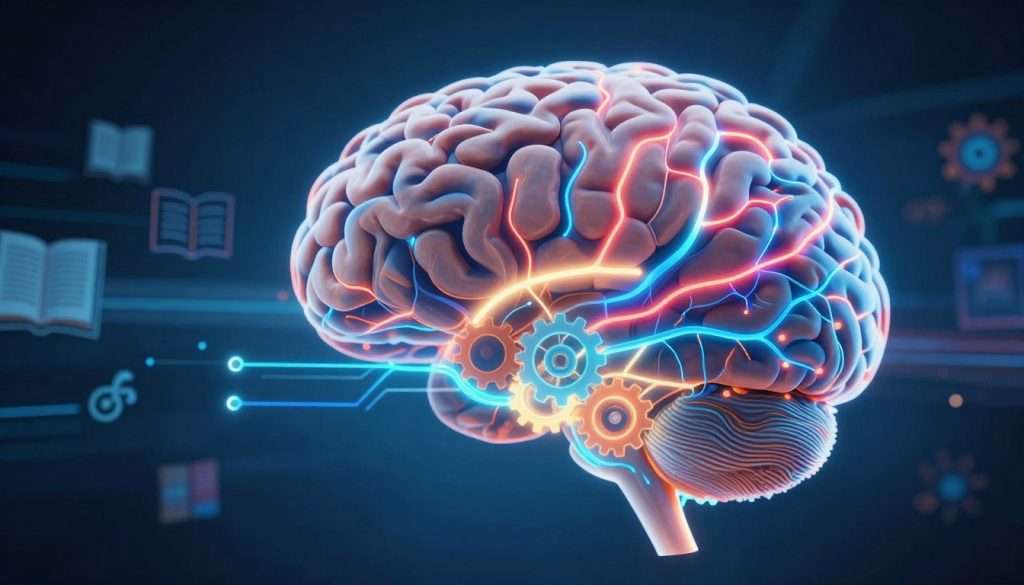
Neuroplasticity: Your Brain’s Ability to Rewire Itself
Neuroplasticity is a big deal in neuroscience. It means your brain can change, adapt, and grow as you live. This is the base of cognitive development. It shows that our brain cells can change and adapt quickly.
“The brain is a highly dynamic organ, capable of reorganizing itself in response to new experiences, environments, and learning.”
This ability to change is key for learning new things and getting better after brain injuries. It shows that our thinking skills can grow and get better over time.
The Role of Neural Connections in Learning
Neural connections, or synapses, are like bridges between brain cells. They help us process and store info. The strength and number of these connections are important for learning and memory.
When you learn something new, you make new connections. The more you practice, the stronger these connections become. This is why practicing and repeating new info is important for mastering skills.
| Aspect | Description | Importance |
|---|---|---|
| Neural Connections | Bridges between brain cells for information processing and storage | Essential for learning and memory |
| Neuroplasticity | Brain’s ability to change, adapt, and grow | Foundation for cognitive development |
| Information Processing | How the brain handles new information | Crucial for learning and memory formation |
Understanding how our brains work, the role of neuroplasticity, and the importance of neural connections helps us see the complex processes of cognitive development. This knowledge lets us take charge of our brain health and growth.
5. Key Factors That Influence Intelligence Development
The journey to boost brain power starts with knowing what affects intelligence. Intelligence growth is shaped by genetics, environment, education, and culture.
Genetic Predispositions and Environmental Influences
Genetics set the starting point for intelligence. But, the environment can change how genes work.
For example, toxins or bad nutrition can slow down brain growth. But, a good environment can help it grow.
Education and Early Childhood Experiences
Early learning is key for brain growth. Good education lays a strong base for learning more.
Having good teachers, involved parents, and a good home life matter a lot.
Cultural and Social Factors
Culture and society shape how we think. If a culture values learning, people are more likely to grow their minds.
The Impact of Socioeconomic Background
Where you grow up affects your education and health. These are important for brain growth.
Access to Resources and Opportunities
Having access to books, computers, and learning programs helps. These tools are key for growing your brain.
To improve your brain, get enough sleep, lower stress, and read a lot. These habits help your brain stay healthy and grow.
| Factor | Description | Impact on Intelligence |
|---|---|---|
| Genetic Predispositions | Inherited traits that influence cognitive abilities | Sets the baseline for intelligence |
| Environmental Influences | Exposure to stimuli, nutrition, and toxins | Can enhance or hinder cognitive development |
| Early Childhood Education | Quality of education and parental involvement | Fosters foundational cognitive skills |
Knowing these factors helps us take steps to improve our brains and grow our minds.
6. Intelligence Enhancement Techniques and Strategies for Boosting Intelligence
Unlock your full potential by adding effective techniques to your daily routine. We see boosting intelligence as a journey, not just a goal. We’re here to help you every step of the way.
Brain Training Exercises and Cognitive Puzzles
Brain exercises work on your whole brain, improving all areas at once. This can greatly enhance your cognitive function. Engaging in brain training exercises is both fun and challenging.
Sudoku, Chess, and Strategic Games
Games like Sudoku, chess, and others are great for improving your mind. They boost problem-solving, logical thinking, and memory. For example, Sudoku needs critical thinking and making connections. Chess requires planning and foresight.
Digital Brain Training Applications
There are many digital apps for brain training. These apps offer puzzles and games for different intelligence areas, like memory and speed. Lumosity and Peak are popular choices.
| App Name | Primary Focus | Key Features |
|---|---|---|
| Lumosity | Memory, Attention, Processing Speed | Personalized training programs, Progress tracking |
| Peak | Cognitive Flexibility, Memory, Mental Agility | Daily workouts, Games for focus and productivity |
Learning New Skills and Languages
Learning new skills or languages boosts your intelligence. It challenges your brain and helps it adapt. Learning a new language, for example, improves memory and flexibility.
Memory Enhancement Techniques
Improving your memory is key to boosting intelligence. Techniques like mnemonic devices and spaced repetition can help.
Mnemonic Devices and Memory Palaces
Mnemonic devices help you remember better. A memory palace, for example, uses visualization to associate items with places.
Spaced Repetition Systems
Spaced repetition reviews material at longer intervals to solidify it in memory. It’s great for learning new words or dates.

By using these techniques daily, you can greatly improve your cognitive abilities. You’ll unlock your full potential.
7. Mental Agility Training and Enhancing Brain Power
Mental agility training helps make your mind sharper and more responsive. It focuses on specific skills to boost your brain power and mental performance.
Speed Processing Exercises for Quick Thinking
Speed processing exercises help you process information fast and accurately. They can be simple, like timed quizzes, or complex, like video games that test your reaction time.
Example Activities:
- Timed math quizzes
- Reaction time games
- Rapid reading exercises
Regular practice of these exercises improves your ability to think quickly and make fast, smart decisions.
Working Memory Strengthening Activities
Working memory is key for holding and manipulating information temporarily. Strengthening it helps with following instructions, doing mental math, and more.
Try these activities:
- Memory games like “n-back”
- Mental math exercises
- Following complex instructions
Strengthening your working memory boosts your ability to learn new things and handle tasks that need mental juggling.
Cognitive Flexibility Development Through Diverse Challenges
Cognitive flexibility lets you switch between mental tasks and adapt to new info. You can develop this skill through diverse challenges.
Task Switching Exercises
Task switching means quickly switching between different tasks or mental sets. You can train this by doing exercises that make you switch between different rules or tasks.
Pattern Recognition Training
Pattern recognition is a key part of cognitive flexibility. It involves finding patterns in data, images, or sequences.
Benefits of Pattern Recognition:
| Benefit | Description |
|---|---|
| Improved Problem-Solving | Enhances ability to identify solutions |
| Enhanced Learning | Facilitates quicker understanding of new concepts |
| Better Decision Making | Allows for more informed decisions based on pattern analysis |
As Dr. Daniel Kahneman said, “The mind is made up of a lot of little parts, and they all have to work together.”
“The mind is made up of a lot of little parts, and they all have to work together.”
Adding these mental agility training techniques to your daily life boosts your brain power and cognitive function. Research shows that hard work in brain training can increase your memory and intelligence.
8. Improving Intelligence Skills Through Daily Habits
Improving your intelligence isn’t just about big plans. It’s about small, daily habits that sharpen your mind. By adding simple habits to your day, you can boost your brain power and grow your intelligence growth mindset.
Mindfulness and Meditation for Cognitive Clarity
Mindfulness and meditation are great for a clear mind. They help you focus, lower stress, and remember better. Just a few minutes each day can make learning easier and improve your brain.
Start with simple meditation like deep breathing or guided meditations. As you get better, try more advanced techniques to sharpen your mind even more.
Reading and Continuous Learning Practices
Reading is a top way to boost your intelligence. It introduces new ideas, expands your vocabulary, and widens your view. Reading regularly keeps your mind sharp and expands your knowledge.
Make your reading list varied. Include fiction, non-fiction, and educational books. This keeps your reading exciting and stimulates your brain in different ways.
Critical Thinking and Problem-Solving in Everyday Life
Critical thinking and solving problems are key to smarter thinking. By practicing these in daily life, you improve at analyzing, deciding, and solving complex issues.
Asking Better Questions
Improving critical thinking starts with better questions. Don’t just accept what you’re told. Ask deeper questions to understand more and sharpen your analytical skills.
Analyzing Information Sources
In today’s world, knowing the credibility of sources is crucial. Always check the reliability and bias of information, whether in news, social media, or books. This skill helps you make better choices and avoid false information.
By making these habits part of your daily life, you can greatly improve your intelligence and keep growing your intelligence growth mindset.
9. Cultivating Intellectual Abilities Through Lifestyle Optimization
Improving your brain power is not just about learning. It’s also about how you live. Your lifestyle choices greatly affect your brain health and thinking skills. We’ll look at how to improve your diet, exercise, and sleep to boost your brain.
Nutrition for Brain Health and Cognitive Function
What you eat directly affects your brain’s work. Eating foods rich in important nutrients helps your brain stay sharp and protects it from decline.
Essential Nutrients for Brain Power
Some nutrients are key for brain health. Omega-3 fatty acids, antioxidants, and B vitamins are great for your brain. They help with memory, focus, and how fast you process information.
- Omega-3 Fatty Acids: Found in fatty fish, nuts, and seeds, these support brain cell structure and function.
- Antioxidants: Abundant in fruits, vegetables, and berries, antioxidants help protect the brain from oxidative stress.
- B Vitamins: B6, B9, and B12 are important for making neurotransmitters and keeping your brain healthy.
Foods That Support Memory and Focus
Adding certain foods to your diet can help with memory and focus. Here are some top foods for your brain:
| Food | Benefit |
|---|---|
| Blueberries | Rich in antioxidants, improving memory and cognitive function |
| Fatty Fish (Salmon, Sardines) | High in omega-3 fatty acids, supporting brain health |
| Nuts and Seeds (Walnuts, Chia Seeds) | Packed with healthy fats and antioxidants, enhancing cognitive function |
Physical Exercise and Cognitive Performance
Exercise is good for your body and brain. It boosts your brain’s function, memory, and even helps grow new brain cells.
Exercise improves blood flow to the brain, helps grow new connections, and lowers the risk of brain decline.
Sleep Quality and Mental Restoration
Sleep is vital for your brain. It helps your brain process memories, remove toxins, and get ready for the next day.
The Connection Between REM Sleep and Learning
REM sleep is key for learning and memory. It replays and processes what you’ve learned, making connections stronger.
Good sleep hygiene, like a regular sleep schedule and a restful sleep space, boosts your brain power.
10. Developing an Intelligence Growth Mindset
Your ability to grow and develop your intelligence is linked to your mindset. Believe in yourself to overcome obstacles and unlock your full potential. An intelligence growth mindset is more than being optimistic. It’s about living a life that encourages continuous learning and improvement.
Embracing Challenges and Learning from Failure
Embracing challenges is key to developing an intelligence growth mindset. When faced with a challenge, you can choose to avoid it or embrace it. Embracing challenges allows you to learn and grow, while avoiding them can hold you back. As Nelson Mandela once said,
“The greatest glory in living lies not in never falling, but in rising every time we fall.”
Learning from failure is also crucial. Instead of getting discouraged by setbacks, see them as chances to learn and improve. This mindset keeps you motivated and focused on your goals.
The Power of Deliberate Practice
Deliberate practice is a focused way to improve your skills and intelligence. It involves setting specific goals, getting feedback, and refining your performance. Deliberate practice is not just about putting in the hours; it’s about practicing with a purpose.
- Identify areas for improvement
- Set specific, achievable goals
- Receive and act on feedback
- Continuously challenge yourself
Setting Realistic Goals for Intellectual Development
Setting realistic goals is vital for making progress in your intellectual development. Goals give you direction and motivation, helping you stay focused on what you want to achieve.
Short-Term and Long-Term Cognitive Goals
It’s important to have both short-term and long-term goals. Short-term goals motivate you immediately and give you a sense of accomplishment. Long-term goals give you direction and purpose.
| Goal Type | Timeframe | Example |
|---|---|---|
| Short-Term | Days to Weeks | Completing a challenging puzzle |
| Long-Term | Months to Years | Learning a new language |
By setting realistic goals and working towards them, you can continuously improve your intelligence and achieve your full potential.
11. Conclusion
Understanding what is intelligence and how to achieve it is a journey. It involves recognizing different types of intelligence. Using these, you can improve your thinking skills.
By using the strategies we talked about, you can unlock your brain’s full power. You’ll gain more knowledge and understand yourself better. This journey is not just about getting smarter. It’s about growing your mind and always learning.
Remember, intelligence can grow and change over time. By practicing mindfulness, reading, and training your brain every day, you’ll get smarter. You’ll be on your way to reaching your highest potential.