

You can teach yourself a new subject by setting a clear target, studying with useful resources, and testing what you can recall. Self-Study Success comes from using those steps to build knowledge you can apply, not simply collecting notes.
You might want to learn beyond a class, explore a new subject, or fill a gap at school. A teacher can help, but you can also make steady progress on your own. Self-study does not mean refusing help when you need it.
We’ll focus on simple strategies that fit real life: choose a target, make time, practice, and check your progress. You do not need special tools or hours of free time to begin. Start with one subject you genuinely want to understand, not a dozen tabs open at once.
Key Takeaways
- Choose a learning goal you can show through an action.
- Build a schedule that fits your actual week.
- Use resources that match the skill you want to learn.
- Practice recalling information, then check your answers.
- Ask for help when you keep meeting the same roadblock.
What Does Self-Study Success Look Like?
Self-study is working when you can explain what you are learning, see your progress, and decide what needs attention next. Self-regulated learning means planning, monitoring, and adjusting your own learning. It is more than spending long hours at a desk.
Look for changes in what you can do, not just time spent studying. A 2024 systematic review examined 121 articles on self-regulated learning strategies and technologies. It identified goal setting, time management, self-reflection, help-seeking, monitoring, and thinking strategies as part of the process.
Take ownership of the process
Taking ownership means noticing when a plan is not helping and changing your approach. An independent learner takes responsibility for planning and checking their own progress. You can ask a teacher, tutor, or classmate for help and still be independent.
A course may set the main topics, while you decide what to review and how to test yourself. In a group, you can explain an idea, hear another view, and spot a gap in your own thinking. Independence can work alongside classes and collaboration.
Time at a desk is not proof of learning; your ability to explain or use an idea is stronger evidence.
Build skills beyond a test score
Self-regulated learning can build skills that matter beyond one subject. You practice setting goals, making choices, asking for guidance, and reflecting on what worked. Those skills can help you handle new topics in school and beyond it.
A systematic review of 121 articles describes strategies and technologies linked with self-regulated learning. The review also shows that these strategies include help-seeking, not only working alone.
Real progress can look like solving a problem without a worked example, explaining a reading in your own words, or using a skill in a new setting. Judge progress by what you can do with the knowledge, not by the number of pages you have covered.
Choose a Goal You Can Prove
“Get better at science” is hard to measure, but “explain how a cell makes energy” gives you something to aim for. A useful goal names the skill you want to show and how you will know you can do it.
Make the goal specific, measurable, achievable, relevant, and time-bound. These are the five parts of a SMART goal. They turn a broad interest into a target you can check without pretending every learner needs the same deadline.
Turn curiosity into a target
Start with the question or ability that draws you in. If you like astronomy, your first target could be naming the planets in order and explaining one feature of each. That gives your curiosity a clear path without shrinking it to a test score.
A six-month goal could be reaching an elementary level in Korean, such as introducing yourself and understanding familiar phrases. Six months is one possible timeline, not a standard. Your starting point, available time, and chosen skill all matter.
Make the goal measurable
A goal becomes useful when you can demonstrate the result. Choose a way to show knowledge, such as explaining a concept aloud, completing a set of problems, or making something that works.
Use this short checklist to turn an interest into a goal:
- Name the skill or subject you want to learn.
- Describe what you will be able to do.
- Choose a way to demonstrate that ability.
- Set a realistic deadline for your target.
- Review the target if your circumstances change.
For example, “study science” does not say what you will learn or how you will check it. “Explain how a cell makes energy using a labeled diagram” gives you a clear result. Write your goal as an action you can demonstrate, such as solving a problem or explaining a concept aloud.
Build a Study Schedule That Fits Real Life
A schedule you can follow on an ordinary Tuesday beats a perfect timetable you abandon by Wednesday. A half-hour of daily study is a practical starting point, not a rule that every student must follow.
Choose one repeatable study block and give it a clear task. A regular time and place can help turn study into a habit. Add short breaks so one session does not become a staring contest with your textbook.
Set up your week with these steps:
- Choose the days when study can fit.
- Block a starting time you can usually keep.
- Name the task for each study block.
- Leave room for school, work, rest, and family.
- Check the plan once a week and make needed changes.
For example, you might study after dinner on three weekdays, with a short break midway through each session. If that time clashes with a practice or work shift, choose another repeatable slot. A useful schedule leaves room for the rest of your life.
A missed session does not erase the work you have done or force you to restart the whole plan. If you miss a block, reschedule the task once instead of doubling the next session.
Choose Resources Without Getting Lost
If you want to speak a language, a stack of reading material alone will leave an important skill unpracticed. Choose resources that match the ability you want to build, then use a manageable mix.
A good resource gives you a way to practice the target skill. Books can explain ideas in depth, while videos can show a process. Podcasts support listening, online courses organize lessons, and hands-on practice helps you learn by doing.
Match the resource to your goal
Different formats suit different tasks. A book may help you understand grammar, but speaking practice gives you a chance to use it. A video can show how a tool works, while building or repairing something lets you test that knowledge.
MOOCs are flexible online courses, often created by universities. Some courses are free, while others charge a fee or offer a certificate. TED Talks offer mostly free videos, which can introduce a topic or share an expert’s view.
One course may not cover every skill you need. A course with a strong reading list may be a poor fit if your goal calls for conversation or hands-on work. Check the syllabus and workload before committing your time.
Check credibility before committing
Use this checklist before adding a new resource to your routine:
- Match the format to the skill you want to practice.
- Inspect the course outline for the topics you need.
- Check whether lessons include practice or feedback.
- Confirm that the material is current for your subject.
- Avoid collecting more resources than you can use.
For a changing topic, an old video may teach steps that no longer work. For a skill that depends on feedback, a book alone may leave you guessing. Before committing, check that the resource gives you a way to practice the exact thing you want to learn.
How to Actually Study: Practice Before You Reread
Close your notes and try to explain the idea before you decide it needs another reread. This closed-notes self-quiz is a recall check done without looking at your notes.
Try to retrieve information from memory, then check it against a trusted answer. You can do a brain dump, solve practice problems, use flashcards, or explain an idea aloud. Each method asks your mind to produce an answer rather than recognize familiar words.
Retrieve the answer from memory
For a brain dump, write everything you can remember about one topic before opening your notes. For a math lesson, work through a problem without copying a solved example. For a history topic, explain the causes of an event in your own words.
Flashcards can help with short facts, terms, or steps. Hide the answer, say or write what you remember, and only then turn the card over. If you recognize the term but cannot explain it, mark it for another attempt.
| Method | What you do | Recall required | What it helps reveal |
|---|---|---|---|
| Rereading or highlighting | Review written notes or mark key lines | No | Which ideas look familiar |
| Retrieve with practice questions | Answer questions before checking notes | Yes | What you can recall and apply |
| Explain a concept or draw a model | Describe an idea or sketch its parts from memory | Yes | Missing steps or unclear links |
Use feedback to correct gaps
Retrieval shows what you can bring to mind, while feedback helps you spot errors. Check your answer against a worked solution, teacher feedback, or a trusted course text. Do not treat a confident answer as correct until you have checked it.
A 2025 study followed 554 students in an introductory genetics course at the University of Colorado Boulder across three semesters. Actual self-testing predicted final course performance. That result does not prove self-testing alone caused better results, but it supports testing what you know.
When an answer is wrong, write down the correction and try the question again without looking.
Use the 1-3-5-7 Rule to Review
If you learn a topic on Monday, Monday is day 0 and your first 1-3-5-7 review lands on Tuesday. The 1-3-5-7 rule schedules closed-notes reviews on days 1, 3, 5, and 7 after first learning.
Each review should be a quiz from memory, not another quick look at the page. Try a brain dump, flashcards, or practice questions. The rule is one fixed-interval form of spaced repetition, which means reviewing information at separated intervals to strengthen recall.
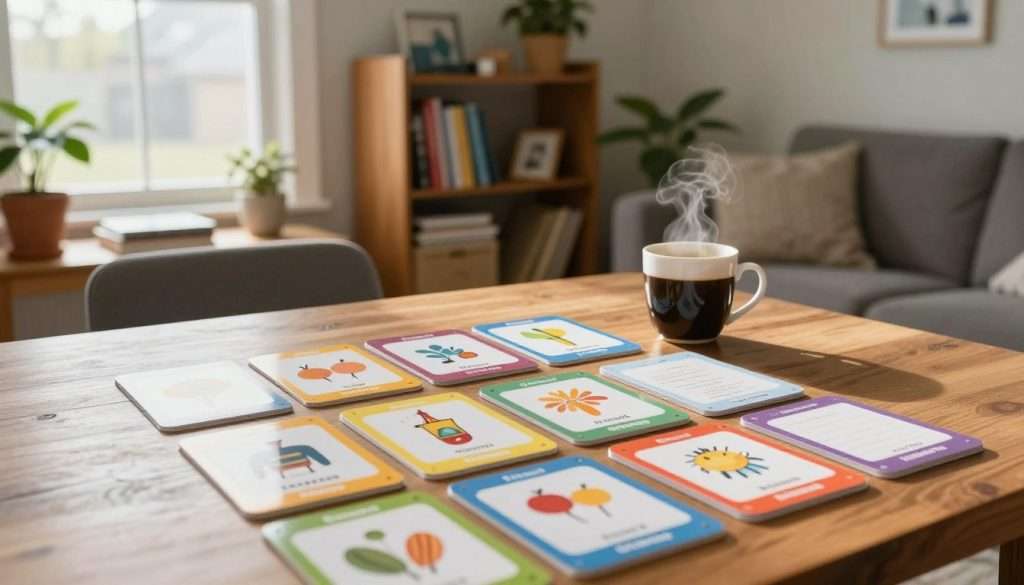
Run reviews on days 1, 3, 5, and 7
Suppose you learn a topic on Monday. Review it Tuesday, Thursday, Saturday, and the following Monday. If you still need to recall it later, you can add reviews on days 14 and 30, or day 60 for longer-term study.
Paper flashcards can sit in piles marked for the next review day. Apps such as Anki, Quizlet, and Gizmo can schedule reviews and track progress. Use the tool to manage the dates, not to replace the quiz itself.
Adjust the intervals to fit the material
The numbers in 1-3-5-7 are not special. Shorter gaps can suit unfamiliar or difficult material, while longer gaps can suit ideas you already know well. If you cannot recall an answer, shorten the gap or return to the explanation.
Other schedules count from a different starting point:
| Method | Starting point | Review pattern | Best fit |
|---|---|---|---|
| 1-3-5-7 | First learning day, day 0 | Days 1, 3, 5, and 7 after learning | Building recall after learning a topic |
| 2357 | First learning day | Reviews at increasingly longer intervals | Letting gaps grow as recall improves |
| Reverse-counting schedules | Exam day | 7-3-2-1 counts back; reverse 2357 counts back 1, 2, 3, 5, and 7 days | Planning review around an exam date |
The 7-3-2-1 schedule counts backward from an exam, while reverse 2357 uses a different set of backward intervals. These schedules are not the same as starting day 0 after learning.
Spaced repetition reinforces material you understand; it cannot teach what you did not understand in the first place. If you cannot answer a review question, return to the explanation first, then test yourself again.
Check What You Know and Adjust
A quick quiz can reveal a gap that another hour of comfortable rereading might hide. Use self-assessment to find what needs work, rather than treating a good feeling as proof of progress.
Confidence is not the same as a correct answer. You may feel sure because a phrase looks familiar, even when you cannot explain it. A closed-notes check gives you clearer evidence.
Try this short routine after a practice quiz:
- Take the quiz without notes.
- Mark missed or uncertain answers.
- Explain why each error happened.
- Choose one gap to revisit.
- Record when you will check it again.
A self-assigned mini-assignment can take 20-40 minutes. You might solve a set of problems, write a short explanation, or make a small project using the skill. At the end of a unit, a practice exam can show whether you can use the information across several topics.
You can also give a short talk without reading from a script. If you can explain the main idea and answer a follow-up question, you have a useful sign of understanding. Keep a short error log so your next session starts with a clear task.
Keep Going When Motivation Drops
A motivation dip does not mean you chose the wrong subject or lack discipline. Motivation can change from day to day, especially when you are guiding your own learning instead of following a teacher’s daily plan.
Make the first step small enough to start on a low-energy day. You could open your notebook and answer one question, review one difficult term, or spend five minutes on a practice task.

Expect motivation to wobble
A 2024 qualitative study used six focus-group discussions with 29 first-year university students. Participants said shifts in motivation and the move to self-regulated study could make effective habits harder to form.
That change can feel odd if you are used to a teacher choosing the next task. Without that daily structure, it may take practice to decide what to do and follow through. A missed day is information about your routine, not a verdict on your ability.
Students in the study also described a common tradeoff: they sometimes chose methods they thought would help them pass an upcoming exam, even when they knew other methods better supported long-term learning. That choice may feel efficient in the moment, but it can leave less time for deeper practice.
Make follow-through easier
Pair study with an existing routine, such as reviewing a card after breakfast or opening a course page after school. A study buddy can make the commitment visible. You do not need to study together every time; a quick check-in can help you stick with a task.
Set out the book or worksheet before your planned session, so starting takes fewer steps. Keep the task clear enough that you do not spend the first ten minutes deciding where to begin. On a low-energy day, keep the habit alive with one small, specific task.
Spot Struggles Early and Ask for Help
One rough quiz is a setback; repeated missed work, slipping performance, and trouble keeping up deserve a closer look. Look for a pattern over time, not one bad grade.
Repeated difficulty is a reason to ask for support, not to label yourself as lazy or incapable. A teacher, adviser, or student-support staff member can help you sort out what is getting in the way.
Notice patterns, not one bad grade
Notice if you keep missing work, perform worse across several assignments, or struggle to explain material after practice. Trouble keeping a routine can also signal that your current approach needs attention. One tough week may have a clear cause, so look at the full picture.
In 2024-2025, an estimated 22% of U.S. K-12 students were chronically absent, compared with an estimated 15% before the pandemic. Chronic absenteeism means missing at least 10% of school days, or 18 days in a typical 180-day school year.
A 2025 survey found that 4 in 10 U.S. school districts ranked reducing chronic absenteeism among their top three challenges for 2024-2025. One-quarter of youths in K-12 districts did not think chronic absenteeism was a problem. Sickness was the most commonly reported reason youths gave for missing school.
Ask for the right kind of support
Attendance needs context. A student who misses school because of sickness needs a different response from one who needs help with a course or schedule. The chronic absenteeism figures do not explain every student’s reason for being away.
Academic difficulty can involve several academic, social, or outside factors. A 2023 pharmacy-education commentary recommends considering academic performance alongside accountability and behavior indicators. That means one low score should not stand in for a full view of a learner.
Early support may involve faculty, student-support staff, or assessment professionals. Bring one specific example of what is not working when you ask for help.
Use Digital Tools Without Letting Them Run the Show
A digital tool earns its place when it helps you practice, get useful feedback, or notice progress. Technology can support learning, but an app alone cannot decide what you need to learn next.
Keep the goal and the learning task in charge of the tool. Learning management systems, online courses, AI, collaborative platforms, and learning analytics can support self-regulated learning through feedback and independent work.
| Tool type | What it can support | What to check |
|---|---|---|
| Learning management systems and MOOCs | Course lessons, task lists, and feedback | Access, clear directions, and instructor support |
| AI-supported feedback | Personalized comments and practice prompts | Accuracy, privacy, and whether feedback explains why |
| Collaborative platforms and learning analytics | Peer discussion and progress patterns | Useful group activity and clear progress measures |
A 2024 systematic review of 121 articles found that these kinds of technologies can support personalized feedback and autonomous learning. The review of digital self-regulated learning also notes that limited access, technical issues, resistance to change, and inadequate instructor training can reduce those benefits.
A tool should make a learning task clearer or easier to practice, not add another layer of busywork.
If a platform keeps crashing or a connection is unreliable, you can still make progress. A paper notebook or printed book is a sound choice when digital access fails. Keep a low-tech backup for the days when a connection or device lets you down.
Conclusion
You do not need a perfect plan to begin teaching yourself, just one clear target and a first study session. Regular active practice is enough to get started. You can adjust the plan as you learn what helps you remember and use new ideas.
Choose a subject you care about, then pick one small task you can finish today. Want to go deeper? If this article resonated with you, my free book How to Become the Smartest Student in the Classroom gives you a full system, memory techniques, study routines, and strategies that actually stick. No cost, no catch.
Choose your first small study task today, then get your free copy here: https://www.studyingmachine.com/free-books/.