
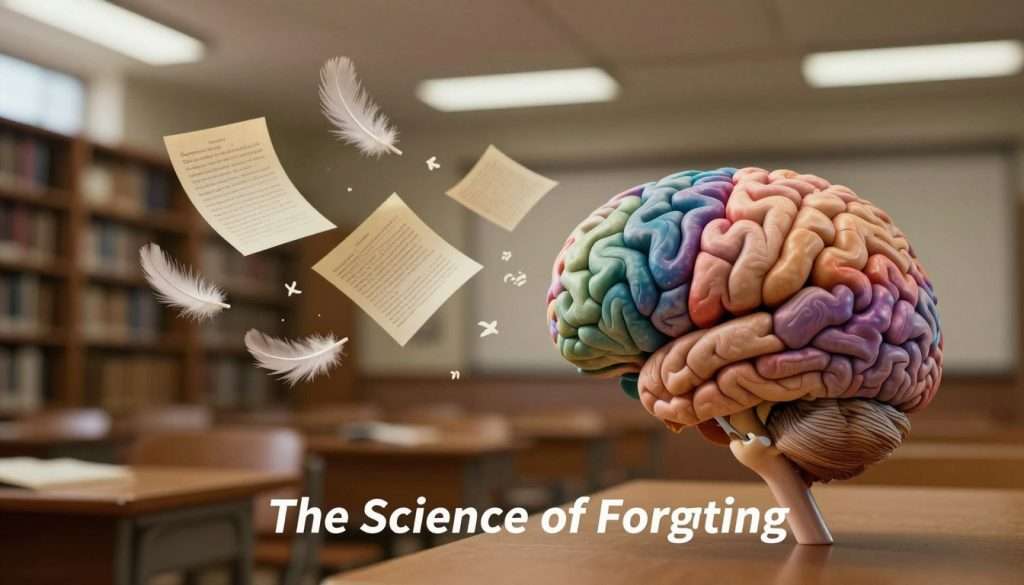
Imagine spending three long hours studying biology. We feel like total experts, ready to ace any pop quiz. But tomorrow, 70% of that hard work just disappears.
Don’t worry, friend! This isn’t about lacking focus or being “bad at studying.” It is actually the science of forgetting at work in a healthy, normal brain.
A human mind is built for pruning info aggressively for staying efficient. Back in 1885, Hermann Ebbinghaus mapped this process using a famous curve. He found that without review, memory retention drops to about 25% within just one week.
This natural decline happens to everyone, regardless of intelligence. Understanding why you lose what you learn is a first step in beating this curve. We can help rewire habits for keeping knowledge locked in forever.
Key Takeaways
- Forgetting is a natural biological process designed for brain efficiency.
- Most people lose approximately 70% regarding new information within 24 hours.
- Memory retention typically plummets toward 25% after one week without practice.
- Ebbinghaus Forgetting Curve illustrates how quickly knowledge fades away.
- Intentional review sessions are necessary to disrupt systematic memory loss.
- Effective learning requires strategies that work with your brain design.
The Mechanics of Memory: How the Brain Encodes Information
To understand forgetting, we must first learn how our brains handle memory. Our brains process about 11 million bits of sensory information every second. If it stored everything, you’d be overwhelmed in hours. Luckily, forgetting helps us stay functional.
Memory encoding is complex and involves several stages. Your hippocampus decides what moves from short-term to long-term memory. It looks at emotional significance, repetition, and how hard it is to recall.
The Three Stages of Memory Processing
Memory processing happens in three stages: sensory memory, short-term memory, and long-term memory.
- Sensory memory stores information from our senses briefly.
- Short-term memory, or working memory, holds information longer but has limited capacity.
- Long-term memory stores information for a long time, sometimes forever.
Information moves from one stage to the next based on attention and repetition. For example, repeating someone’s name helps move it from short-term to long-term memory.
Synaptic Plasticity and Neural Pathways
Synaptic plasticity is the brain’s ability to change and create new connections. It’s key to learning and remembering new things. When we first learn something, new pathways are made. The more we practice, the stronger these pathways get.
Repetition and practice are crucial for keeping memories strong. This is why actively revisiting what you’ve learned is better than just reading it again. It helps improve memory retention.
The Science of Forgetting: Why You Lose What You Learn (And How to Fix It)
The human brain forgets, but we can fight it. Forgetting is part of learning, but knowing why helps us fight it better.
Decay Theory vs. Interference Theory
There are theories on why we forget. Decay Theory says memories fade as time goes by. Interference Theory says new info gets in the way of old memories.
Key differences between Decay Theory and Interference Theory:
- Decay Theory: Suggests that memories fade due to the passage of time.
- Interference Theory: Proposes that new information interferes with old memories.
The Ebbinghaus Forgetting Curve shows memory loss is steep at first. It’s key for learning methods that don’t engage us much.
Retrieval Failure and Cue-Dependent Forgetting
Retrieval failure happens when we can’t recall info. Cue-dependent forgetting is when we can’t remember without cues from learning.
To beat these, we need strategies to help remember. Active recall and spaced repetition are great for remembering over time.
By understanding forgetting and using smart learning methods, we can keep more info. This helps us reach our learning goals.
The Ebbinghaus Forgetting Curve Explained
Learning about the Ebbinghaus Forgetting Curve can change how you remember things. It comes from Hermann Ebbinghaus’s work on memory. It shows how our brains forget information over time.
The curve shows memory loss is not steady. You lose the most in the first hour. Then, it keeps going fast for 24 hours before slowing down. Knowing this helps us fight forgetting and keep more in our memory.
Understanding the Rate of Memory Loss
The Ebbinghaus Forgetting Curve shows forgetting speeds up then slows down. The first 24 hours are key for keeping information. By understanding this, we can fight forgetting.
For example, learning a new language is tough without practice. Without review, you might forget a lot in the first day. But, reviewing at the right times can help you remember more.
The Importance of Timely Review
Reviewing at the right time is key to beating the forgetting curve. By checking in at the best times, you can strengthen your memory. This doesn’t mean constant cramming. Instead, spaced repetition helps, where you review at longer intervals.
Using the Ebbinghaus Forgetting Curve helps us learn better. It makes learning more efficient and less stressful. This way, we can remember more and learn faster.
Biological Factors Influencing Memory Retention
Ever wondered why some memories stick while others fade away? It all boils down to the biological mechanisms at play in our brains. Our brains are incredibly complex, and when it comes to memory, several biological factors come into play to determine what we retain and what we forget.
The Role of the Hippocampus
The hippocampus is a crucial part of our brain’s limbic system, playing a significant role in memory formation. It acts as a gatekeeper, deciding what information moves from short-term to long-term memory based on factors like emotional significance, repetition, and retrieval effort. This process is vital for learning and memory retention.
Neurotransmitters and Memory Consolidation
Neurotransmitters are chemical messengers in the brain that play a key role in memory consolidation. Substances like dopamine and acetylcholine are important as they help transmit signals across neurons. This supports the process of memory formation and retention.
To illustrate the concept, let’s consider how these biological factors work together. 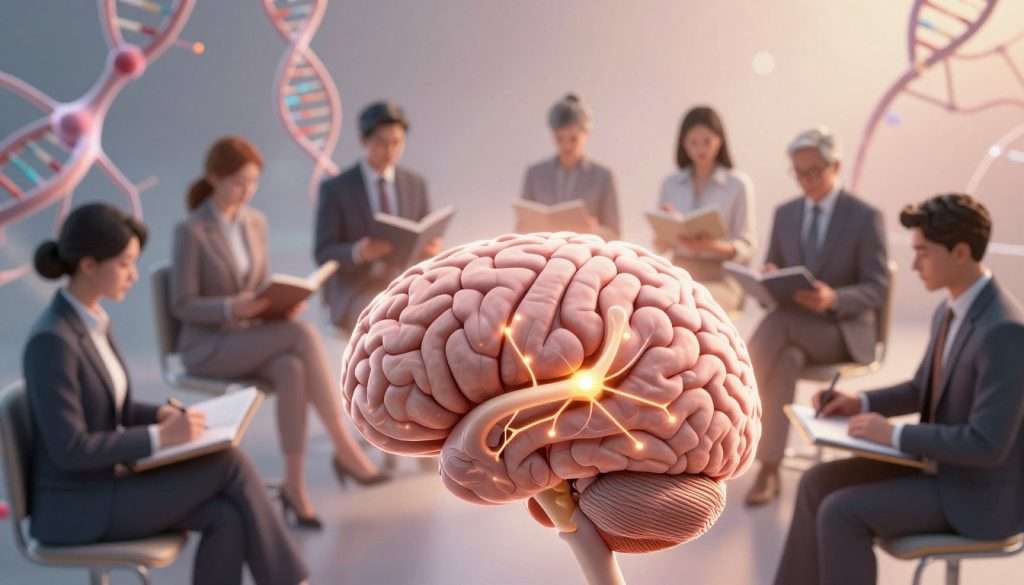
Understanding these biological factors can provide valuable insights into improving memory retention. By recognizing the importance of the hippocampus and neurotransmitters, we can better appreciate the complex processes involved in memory.
Psychological Barriers to Effective Learning
It’s key to know the psychological hurdles to learning to improve memory. Our brains handle a lot of info every day but don’t keep it all. They have a “garbage collection” system to get rid of what’s not needed.
This system is good because it keeps our brains from getting too full. But, how do these psychological factors affect this process?
Cognitive Load and Information Overload
Cognitive load is how much mental effort your working memory uses. Learning something new can quickly become too much if the info is complex or comes too fast. This can cause forgetfulness and make it tough to remember things later.
- Breaking down complex info into simpler bits can help manage cognitive load.
- Visual aids like diagrams or mind maps can also help by offering an alternative way to process info.
The Impact of Stress and Anxiety on Recall
Stress and anxiety are big hurdles to learning well. When stressed, your body’s “fight or flight” response kicks in, releasing cortisol. High cortisol levels can hurt the hippocampus, a key area for memory, making it harder to learn and remember.
“Stress is the trash of modern life – we all generate it but if you don’t dispose of it properly, it will pile up and become a real problem.”
To fight stress and anxiety’s effect on recall, try relaxation techniques like deep breathing or meditation. These can lower stress and help you focus and remember better.
By tackling these psychological barriers, you can create better learning strategies. This can greatly improve your ability to learn and remember new things.
Evidence-Based Techniques to Improve Memory
Let’s dive into how you can boost your memory. It’s not just about studying more. It’s about using the right methods. We have some effective strategies to share with you.
Active Recall and Self-Testing
Active recall is a big game-changer. It means you try to remember information without looking at the answers first. For example, instead of just reading “The mitochondria is the powerhouse of the cell,” you try to recall its function without looking at your notes.
Benefits of Active Recall:
- Strengthens neural pathways associated with the information
- Improves retention and recall
- Enhances understanding by identifying knowledge gaps
Elaborative Rehearsal and Meaningful Encoding
Elaborative rehearsal makes new information meaningful by linking it to what you already know. You can do this by summarizing in your own words or making concept maps.
Connecting New Information to Existing Knowledge
When you connect new info to something you already know, it’s easier to remember. For example, if you’re learning about a new historical event, try to relate it to a similar event you’ve studied before.
Here’s a comparison of different memory enhancement techniques:
| Technique | Description | Effectiveness |
|---|---|---|
| Active Recall | Retrieving information from memory without looking at the original material | High |
| Elaborative Rehearsal | Making new information meaningful by connecting it to existing knowledge | High |
| Spaced Repetition | Reviewing material at increasingly longer intervals to aid long-term retention | Very High |

By adding these evidence-based techniques to your study routine, you can greatly improve your memory. The key is to be consistent and patient. Building new habits takes time.
Leveraging Spaced Repetition for Long-Term Recall
Using spaced repetition can greatly improve your memory. This method involves reviewing material at longer intervals. It helps solidify information in your long-term memory.
Instead of cramming, spread out your review sessions. Review after 1 day, then 3 days, then 7 days, and so on. Each review session helps you remember better over time.
Optimizing Study Intervals
Finding the right study intervals is crucial for spaced repetition. You want to review material just before you’re about to forget it. Research suggests the best interval varies by person and material complexity.
To optimize your intervals, use a simple algorithm. You can do this manually or with digital tools designed for spaced repetition.
The Science Behind Distributed Practice
The science backs up distributed practice and spaced repetition. Studies show it boosts memory retention significantly. Each review session strengthens the neural pathways, making recall easier.
Adding spaced repetition to your study routine can fix forgetting. It helps build a stronger, more reliable memory. This method is great for retaining lots of information over time.
The Role of Lifestyle in Cognitive Health
Our lifestyle greatly affects our brain’s health. This includes our sleep, diet, and exercise. These habits help our brain work at its best.
“The brain is a complex organ, and its health is intricately linked with our overall lifestyle choices,” says experts. Making smart choices in our daily lives can significantly enhance our memory and cognitive function.
Sleep Hygiene and Memory Consolidation
Sleep is key for memory. It helps the brain solidify memories. This is vital for learning and remembering things. Good sleep habits, like a regular schedule and a quiet room, can substantially improve memory consolidation.
A study found that sleep is crucial for memory. Lack of sleep can hurt our memory recall. So, sleep is more than just rest; it boosts our brain power.
Nutrition and Physical Exercise for Brain Function
What we eat and how we exercise also matter for our brain. Eating foods good for the brain, like omega-3s and antioxidants, can boost cognitive function. Exercise also helps by improving blood flow and brain flexibility.
Regular exercise and a healthy diet are good for both our body and brain. They help us stay sharp and focused. These habits are key to improving our memory and brain function.
By choosing healthy habits, we can improve our brain health and memory. It’s about making choices that support our brain, leading to a better life.
Digital Tools and Strategies for Memory Enhancement
In today’s world, improving memory is easier with digital tools and strategies. Technology helps us remember and recall information better. It’s not just about gadgets; it’s about using digital innovation to make learning fun and effective.
Using Flashcard Applications
Flashcard apps have changed studying by making it simpler to review and remember lots of info. Modern AI-powered study platforms can create flashcards from lecture PDFs automatically. This saves a lot of time and helps you remember better.
For example, you can upload your study materials to these platforms. They turn key concepts into flashcards. This makes studying easier and helps you remember important info when you need it.
Mind Mapping and Visual Organization
Mind mapping and visual organization help improve memory by linking different info together visually. Digital tools let you make detailed mind maps that you can edit and grow. This way, complex info becomes easier to understand and remember.
Using digital mind mapping tools, you can visually organize your notes. This creates a map that shows how different concepts are related. It helps you understand and remember better by using visual cues.
Conclusion
The forgetting curve is working against you right now, causing every lecture you attended this week to decay in your memory. But here’s the good news: a small investment today can prevent a massive loss tomorrow.
By understanding the science of forgetting and implementing strategies like spaced repetition and active recall, you can significantly improve memory retention. We’ve explored how our brains process information and how factors like lifestyle and psychological barriers impact our ability to learn.
Now, it’s time to put this knowledge into practice. By working with your brain’s natural processes, you can enhance your ability to learn and remember. Start applying these techniques today to prevent the loss of valuable information tomorrow.
Take control of your memory retention and improve your learning experience. With the right strategies and a bit of dedication, you can overcome the limitations of your memory and achieve your goals.