

You open your laptop, see the unfinished essay, and feel your mind go blank. The deadline is closer than it was yesterday, but your hands stay still.
Plenty of students know that moment. Stress and anxiety can make studying feel harder, but struggling does not mean you are lazy. It means something about the task feels hard to face.
Task chunking means breaking a large task into smaller, visible actions you can complete one at a time. We’ll use small, practical moves to help you start without waiting for perfect motivation.
Key Takeaways
- Pick one clear action instead of tackling the whole assignment.
- Try a brief start, then decide whether to continue.
- Make study plans that fit your actual week.
- Ask for academic or personal support when you need it.
- Small steps count as progress, even on a tough day.
How to Stop Procrastinating and Start Studying (Even When You’re Overwhelmed)
You do not need to feel motivated before taking one small action. Start with one task, choose a visible first move, and give it five minutes.
When the timer ends, you can stop and reassess. Starting may also make it easier to continue, since the work no longer feels like a closed door.
Choose one task, make the first move tiny, and try it for five minutes. When the timer ends, you can stop or continue.
Keep the reset simple. Planning the perfect reset can become another way to avoid the work, so skip the color-coded chart for now.
- Name the one task that needs your attention.
- Choose the smallest visible action, like opening the assignment prompt.
- Commit to five minutes, then decide what comes next.
For a reading assignment, your first move might be finding the chapter and reading one paragraph. For a paper, open the document and type a rough title. Both count as start studying actions, even if they seem almost too small.
During those minutes, focus on the action you chose, not the whole pile of deadlines. If your mind wanders, bring it back without turning that moment into a new reason to judge yourself.
You are allowed to stop when the timer rings. You are also allowed to keep going if momentum shows up. Either choice gives you useful information about what feels manageable today.
This approach works best when the first action fits the real barrier. Choosing a tiny first step is easier once you know what makes the task feel difficult.
Why Do You Put Off Studying?
People often put off studying to escape an uncomfortable feeling or an unclear next step. That pause is information, not proof that you are lazy or unable to learn.
Procrastination affects roughly half of students and about one-quarter of the general population. Procrastination is not itself a mental health diagnosis.
Emotional friction can make work feel risky
Fear of failure can make an assignment feel like a test of your worth, not just your skills. Anxiety may push you to avoid the task because thinking about it brings stress.
Perfectionism can add another trap: if the first attempt must be excellent, starting feels risky. You may wait for more motivation, even though waiting rarely makes the task feel safer.
Procrastination is associated with anxiety, depression, low self-esteem, and ADHD. Putting off work does not prove that someone has any of these conditions.
Practical friction can make the first step unclear
Sometimes the problem is less emotional and more practical. Unclear instructions, boredom, low energy, and distractions can make it hard to see what to do next.
For example, “study biology” gives your mind no clear action to grab. An open textbook, three pages to read, or one practice question gives you a more useful starting point.
Notice which kind of friction appears with this particular task. You might think, “I’m worried my answer will be wrong,” or, “I don’t know what the prompt asks.”
Some people are likely procrastinate when work feels threatening; others get stuck because the next step is fuzzy. Many face both at once, especially near deadlines.
Name the barrier in plain language, without turning it into a label about yourself. Once you can name the snag, you can make the task itself smaller and clearer.
How Can You Make a Big Assignment Feel Smaller?
An essay can feel too large when its next action is hidden inside the phrase “write the paper.” Task chunking makes the work visible by breaking it into smaller actions you can complete one at a time.
Write actions you can see and do, not vague tasks like “work on essay.” That vague note leaves you to decide what “work” means every time you sit down.
Turn the assignment into visible actions
Start with the prompt, then list actions in the order you need them. A useful list might include reading directions, gathering material, drafting a section, and revising.
Each action should describe a result you can recognize. “Find two class readings about the topic” is clearer than “research,” and “write the opening paragraph” beats “do essay.”
Use an essay as a worked example
Suppose your assignment asks for an essay about a book’s main theme. First, open the prompt and note its requirements, such as length and evidence.
Next, choose a working claim, gather relevant material, draft one section, and revise against the assignment criteria. The claim can change as you learn more.
- Open the prompt and note each requirement.
- Choose a working claim in one sentence.
- Gather relevant passages or class notes.
- Draft one section without polishing every line.
- Revise that section using the prompt as a guide.
This list does not ask you to finish the essay in one heroic sprint. It gives each part a clear edge, so you can see where to begin and what complete means.
Keep the steps small enough to act on, but not so tiny that your list becomes a second assignment. Once the work feels manageable, decide when you will do it.
What If You Can’t Make Yourself Start?
The first study block can be short on purpose. Pick a time limit that feels possible now, not one that sounds impressive on paper.
These intervals are options, not rules. When your commitment ends, take a break or continue if you feel ready.
| Approach | Commitment | Useful when | Example |
|---|---|---|---|
| Five-minute start | Five minutes | Beginning feels hardest | Open the assignment and write one rough sentence |
| 15-minute starter | 15 minutes | You want a short, substantial first block | Read the prompt and note its requirements |
| Pomodoro | Usually 25 minutes plus a short break | You are ready for a longer focus period | Draft one section |
The five-minute rule is a promise to work for five minutes, not a promise to finish the whole task. A 15-minute starter gives you room to make real progress without taking over your afternoon.
A Pomodoro work interval usually lasts 25 minutes, followed by a short break. It can suit a task that needs a longer stretch, but you do not need to use it just because a timer app offers it.
Try one approach and notice how it feels. A study session should support your attention, not become another test you can fail.
When the commitment ends, you can stop without guilt, take a brief break, or keep working. A workable first block becomes easier to keep when you choose a realistic place for it in your day.
How Can You Plan Study Time You Can Keep?
Replace “I’ll study sometime tonight” with “I’ll review the biology notes at 6:30 and mark three questions.” A clear time and outcome gives your plan a place to land.
Choose a study window you can repeat without crowding out real life. A plan that fits your week beats a perfect schedule you cannot keep.
Choose a repeatable study window
Look at your actual week, including classes, work, meals, and travel. Pick a regular window that leaves some breathing room, such as Tuesday after class or Saturday morning.
Repeatable does not mean rigid. If your shift changes or a family need comes up, move the block instead of deciding the whole plan has failed.
Set a deadline for the next visible result
Give yourself an internal deadline for one outcome, such as finishing a problem set draft by Thursday. That is more useful than “make progress soon.”
A task list can show the next actions, while an external check-in adds accountability. Ask a classmate or advisor to check whether you completed a specific result.
| Planning tool | Best use | Watch-out |
|---|---|---|
| Calendar block | Protecting a regular window | Do not overbook it |
| Task list | Seeing the next actions | Do not keep rewriting it instead of working |
| External check-in | Adding accountability | Agree on a concrete outcome |
Good time management is not about filling every spare minute. It helps you protect a few useful windows and leave space for the rest of your life.
Try a small plan for one week, then adjust it based on what really happened. A plan only helps if your surroundings make it easier to follow.
How Do You Keep Your Phone From Stealing Your Focus?
The easiest distraction to manage is often the one you have already moved out of reach. Distance adds a pause between an urge to check and the phone itself.
Closing unused apps and placing your phone in another room can reduce easy access to common distractions. You do not need a perfect, silent room to begin.
| Distraction | Practical adjustment | Trade-off |
|---|---|---|
| Phone | Leave it in another room | You may miss a time-sensitive call |
| Open apps | Close the ones unrelated to the task | Keep only the tools you need |
| Noisy or cluttered workspace | Choose a simpler spot or use earplugs if available | Do not spend the study block perfecting the room |
If you expect an important call, keep your phone nearby with alerts turned on for that person. Otherwise, another room makes quick checking less automatic.

On a computer, close the applications you do not need for the task. Keep your document, class site, or calculator open, then shut the tempting extras.
Room changes should be quick. A cleared corner or earplugs may help, but organizing every drawer can become a fresh distraction in disguise.
These small changes help protect your attention without asking you to fight every alert by sheer willpower. Once distractions take less space, you can make the study itself feel less like a chore.
How Can You Make Studying Feel More Rewarding?
Finish one set of flash cards, then enjoy a favorite snack or a few minutes of music. A small reward after a real step can make studying feel less like an endless bill.
Choose one reward for each finished step, not a menu of treats to debate. The point is to notice progress, not to build a complicated system.
Reward a finished step, not a distant fantasy
Pick something affordable or free, such as tea, a short walk, or time for a preferred activity. Keep the reward close to the completed task.
For example, after you finish one practice quiz, take a few minutes to stretch. A reward does not need to be large to help mark the effort.
Make the work more engaging
Passive review can feel like watching paint dry, especially when you only stare at notes. Make the task active by sketching ideas, making a sample question, or explaining a point aloud.
If you are learning a math rule, use a real example from your homework. If you are studying history, draw a quick timeline or connect an event to a place you know.
These habits can make progress easier to see. You are not trying to love every subject; you are giving your mind something to do besides wait for motivation.
Rewards can help you begin, while easing perfectionism helps you keep going when the work feels imperfect. You can make a rough attempt without deciding it represents your final skills.
What If Perfectionism Is Keeping You Stuck?
A student may edit the first essay sentence again and again instead of drafting the next paragraph. That loop often comes from trying to make a first attempt final.
A rough first pass is for getting ideas down; a final submission is for meeting the assignment criteria. Good enough for a first draft does not mean submitting unfinished work.
Give yourself permission to create an imperfect draft, then use the right standards at revision time. Writing and judging at once can turn one paragraph into a wall.
- Write a rough opening, even if the wording feels plain.
- Note questions in the margin instead of stopping to solve each one.
- Set a limit on research before you begin drafting.
- Use the assignment criteria to guide revision.
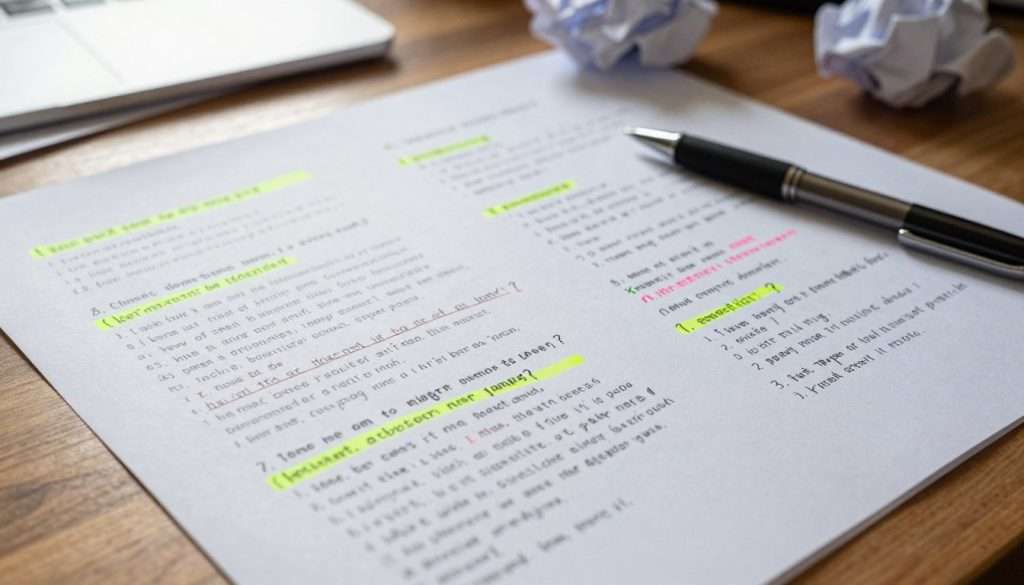
For example, if one fact needs checking, write “check date” beside it and keep drafting. You can return to that note when the main ideas are on the page.
Revision is where you improve the claim, fix unclear parts, and check the prompt. A rough draft is a work step, not a promise about the quality of your final essay.
If the next move still feels unclear, working alone may not be the best tool. Another person or an academic resource can help you find a clearer path.
Who Can Help You Stay Accountable and Build Study Skills?
Tell someone, “I’m going to draft the introduction before we check in.” A concrete promise can help you stay with a chosen task without making studying a group project.
Your study partner does not need to know more than you. Agreeing on a task and checking in can be enough to help you follow through.
Study alongside someone for accountability
A partner or group can offer a steady presence while everyone works on separate things. You might say what you plan to do, work quietly, then share what you finished.
If your partner is learning the same material, you can compare notes or explain one concept to each other. Keep the goal clear, so chatting does not take over the study time.
Ask for clarification or skills support
If assignment directions confuse you, ask the instructor or an academic advisor what a key requirement means. A short question early can save hours of guessing.
Tutoring and a campus learning center can help you build study skills, from note-taking to reading dense chapters. Those resources are for practice, not only for emergencies.
- Study partner: agree on one task and check in.
- Study group: discuss a topic or compare class notes.
- Instructor or academic advisor: clarify requirements and course questions.
- Tutor or learning center: practice study skills with support.
Different resources help with different problems. An instructor can explain a prompt, while a tutor can help you practice a skill you want to improve.
Academic support can make schoolwork clearer and more manageable. If procrastination is affecting your broader well-being, that calls for a different kind of support.
When Should You Get More Support for Procrastination?
Consider extra support when avoidance keeps affecting more than a single assignment. Persistent distress matters, especially when procrastination interferes with relationships, work, or well-being.
A licensed mental health professional can help you explore what is happening without shame or self-diagnosis. Cognitive behavioral therapy can help people examine thought patterns and build practical ways to manage tasks.
If putting things off keeps harming your relationships, work, or well-being, you deserve support. A licensed mental health professional can help you find practical next steps.
Take these signs seriously as prompts to seek help, not as a diagnosis:
- Repeated missed deadlines bring meaningful consequences.
- Distress around everyday tasks keeps growing.
- Study avoidance affects sleep or daily routines.
- You keep putting off getting help when you need it.
One difficult week does not tell the whole story. Pay attention to patterns and how much stress they create in your life.
People seek care for many reasons, and you do not need to reach a crisis before asking for help. You can tell a provider what you have noticed and ask what support might fit.
Today’s next step can be as small as writing down what has been affected or looking up a licensed mental health professional. You deserve care that meets you where you are.
Conclusion
Your next useful action can be small. Choose one task, take one step, and let that count as progress toward your study goals.
For a full system with memory techniques, study routines, and strategies that stick, get the free book How to Become the Smartest Student in the Classroom. No cost, no catch.