
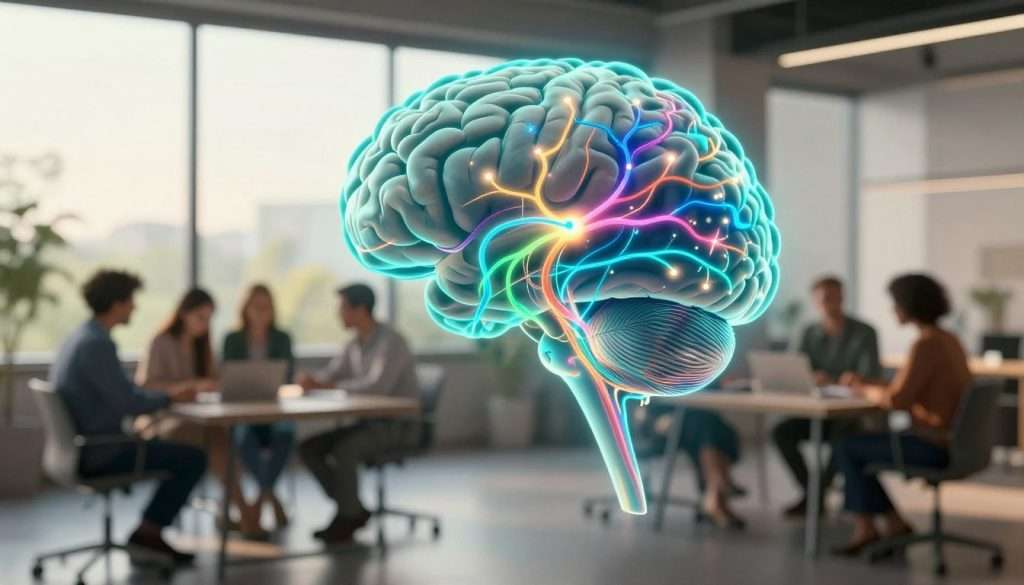
Ever felt like your brain is too set in its ways to learn new things? Good news: your mind is actually a dynamic, ever-changing organ. It rewires itself based on what you experience.
This amazing ability is called neuroplasticity. It’s what lets you pick up new skills at any age. You’re not stuck with a fixed set of talents. Instead, you can grow and adapt every day.
Learning how brain plasticity works can make studying exciting. By embracing the science of neural plasticity, you can change your learning habits. Let’s explore how to use this natural process to improve your learning.
Key Takeaways
- Your brain is a flexible organ that changes throughout your entire life.
- Neuroplasticity allows you to master new skills regardless of your age.
- You can actively influence your brain’s development through consistent practice.
- Studying becomes more effective when you work with your brain’s natural design.
- Small, daily habits create lasting changes in your neural pathways.
Defining Neuroplasticity and Its Biological Foundation
Your brain is not fixed; it changes with every experience. This amazing ability to change itself is called neuroplasticity. It’s why you can learn new things or bounce back from tough times.
The neuroplasticity definition is simple: your brain keeps changing itself based on what you do and think. By understanding this, you can help your brain grow. It’s like having a computer that gets better on its own while you use it!
The Cellular Basis of Neural Plasticity
To grasp how this works, we need to look at your neurons. These tiny cells make complex networks that help you do everyday things. When you do something over and over, these paths get stronger and more efficient.
Imagine walking through a grassy field. The first time, it’s hard because the grass is tall. But with each walk, the path gets clearer. This is what neural plasticity is all about.
Synaptic Pruning and Strengthening
Your brain is great at being efficient. It uses synaptic pruning to get rid of what it doesn’t need. This means your brain removes unused connections to make room for new, important ones.
This process is most active from early childhood to your mid-20s. During this time, your brain plasticity is at its best. You can learn languages and skills easily. Even as you get older, your brain keeps improving its connections, keeping you sharp and adaptable.
The Evolution of Neuroplasticity Research
The journey of understanding our minds is fascinating. For a long time, people thought the adult brain was fixed and unchangeable. They believed that once you grew up, your brain couldn’t change much.
But, neuroplasticity research changed all that. Now, we know our brains are much more flexible than we thought.
From Static Brain Theory to Dynamic Adaptation
Long ago, psychologist William James talked about neuroplasticity in 1890. He said the brain could change and adapt, unlike a fixed machine.
But, this idea was slow to catch on. For decades, most experts thought the brain was set in stone. It took nearly a century for them to accept that our brains can change based on what we do and experience.
Key Milestones in Modern Neuroscience
Then, scientists like Michael Merzenich showed us the power of brain plasticity. They proved that our brains can change and adapt well into adulthood. This breakthrough opened up new ways to learn and heal that were once thought impossible.
To show how far we’ve come, here’s a comparison of the old and new views:
| Feature | Static Brain Theory | Dynamic Adaptation |
|---|---|---|
| Core Belief | Fixed and rigid | Flexible and evolving |
| Adult Potential | Limited growth | Lifelong learning |
| Primary Driver | Genetic destiny | Experience and habit |
| Scientific Status | Outdated model | Modern consensus |
Understanding this change is crucial for personal growth. By seeing our minds as changeable, we can use neuroplasticity to improve ourselves. Embracing brain plasticity lets us take control of our mental health and stay sharp at any age.
Core Benefits of Neuroplasticity for Cognitive Health
Did you know your brain changes every day? It’s a dynamic organ, even though it’s only 2% of your body weight. It uses 20% of your daily energy because it’s always rewiring itself based on what you experience.
The benefits of neuroplasticity are life-changing for anyone wanting to improve their mind. By understanding brain plasticity, you can change how you study and work. Let’s explore how this power helps you stay ahead.
Enhancing Memory and Information Retention
When you learn something new, your brain changes to store it. Through neural plasticity, your neurons get stronger, making it easier to remember. It’s like creating a well-worn path; the more you use it, the clearer it gets.
Using active recall and spaced repetition can help. These methods strengthen your brain’s pathways, making your efforts pay off. It’s not just about studying hard; it’s about studying in a way that fits how your brain learns.
Improving Executive Function and Focus
Executive function is your brain’s control center, handling planning, focus, and distractions. Neuroplasticity makes this center more efficient over time. Deep work trains your brain to ignore distractions and stay focused on your goals.
Your ability to concentrate can improve. By doing tasks that challenge your brain, you build its ability to handle complex information. As you push your limits, your brain becomes better at handling more.
| Feature | Static Brain Model | Plastic Brain Model |
|---|---|---|
| Learning Capacity | Limited and fixed | Continually expanding |
| Response to Stress | Rigid and fragile | Adaptive and resilient |
| Skill Acquisition | Slow and difficult | Efficient and dynamic |
| Focus Ability | Easily distracted | Highly trainable |
Neuroplasticity and Learning New Skills
If you’ve ever found it hard to learn something new, your brain is hard at work. Neuroplasticity and learning are key to growing personally. Every new task is like building a new road in your brain.
Your brain is like a dense forest. Starting a new hobby is like cutting a path through it. It’s tough at first but gets easier with practice.
How Repetition Rewires Neural Pathways
The benefits of neuroplasticity shine through with repetition. Repeating activities strengthens brain connections. This is like adding insulation to wires, making signals travel faster.
Practicing a skill regularly makes the brain’s pathways stronger. Each time, the signal gets stronger. Soon, what was hard becomes easy for your brain.
Overcoming Plateaus in Skill Acquisition
We’ve all hit a wall where progress seems to stop. This is normal in brain plasticity. It means your brain is ready for something new. Don’t give up; try something different.
When you’re stuck, change your environment or how you practice. Novelty helps your brain make new connections. Keep pushing because breakthroughs are just around the corner.
The Role of Neuroplasticity in Stroke Rehabilitation
Think of your brain as a busy city with a roadblock. But instead of stopping, it finds new ways to get around. This is how neuroplasticity and stroke rehabilitation help you recover.
When a stroke hits, your brain doesn’t give up. It starts rewiring, showing how strong it can be. It’s a journey of finding new ways to do things.
Mechanisms of Functional Recovery
The benefits of neuroplasticity shine when we see how the brain adapts. Healthy neurons near the damage start making new connections. They take over tasks lost to the injury.
This process takes time but is very powerful. By practicing, you make these new paths stronger. It’s like making a dirt road into a smooth highway.
Constraint-Induced Movement Therapy
Constraint-Induced Movement Therapy (CIMT) is a key method. Therapists limit your strong limb’s use. This forces your brain to use the weaker side.
This intense focus on the weaker side is crucial. It stops the brain from ignoring it. It’s a clear example of “use it or lose it.”
| Approach | Focus Area | Primary Goal |
|---|---|---|
| Traditional Therapy | Passive support | Maintain comfort |
| Neuroplasticity Training | Active engagement | Build neural plasticity |
| CIMT | Forced usage | Enhance brain plasticity |
Neuroplasticity Exercises to Boost Brain Power
You can make your brain sharper by treating it like a muscle. Just like you exercise to get stronger, you can do neuroplasticity exercises to keep your mind sharp. Doing new tasks helps grow new brain connections, keeping you sharp at any age.

Cognitive Training and Brain Games
Digital tools have changed the game for neuroplasticity and learning. Studies show that young adults who play brain games often have better memory and focus. These games help improve your speed and attention.
You don’t need to spend hours a day to see results. Even short sessions can help your brain process information better. Here are simple ways to add training to your day:
- Dedicate 15 minutes to a logic-based app during your morning commute.
- Switch up your games weekly to ensure you are not just getting good at one specific task.
- Track your progress to stay motivated as you notice improvements in your daily focus.
The Impact of Novelty and Environmental Enrichment
Games are great, but neuroplasticity also loves the unexpected. Your brain loves new information, making it a good idea to step out of your comfort zone. Novelty helps your brain adapt and grow.
Environmental enrichment doesn’t have to be hard or expensive. It’s about breaking your routine and making your brain work harder. Try these small changes to keep your mind sharp:
- Learn a new language or pick up a musical instrument to challenge your auditory and motor pathways.
- Take a different route to work or school to stimulate your spatial memory.
- Read books on topics you know nothing about to expand your cognitive horizons.
By always looking for new challenges, you keep your neural plasticity high. The goal is to keep your mind curious and active. Embracing the unknown builds a stronger, more capable brain.
Physical Activity and Its Influence on Brain Plasticity
Exercise is more than just physical. It’s also a mental workout. When you exercise, you’re not just burning calories. You’re also boosting your brain’s ability to change and adapt.
Aerobic Exercise and Neurogenesis
Ever felt sharp after a walk? That’s because exercise releases BDNF, a protein that helps your brain grow. This leads to the creation of new brain cells, key for a healthy brain.
Exercise gives your brain the tools it needs to stay sharp. It’s a simple way to keep your brain in top shape. This makes learning and remembering easier.
The Connection Between Movement and Synaptic Health
Movement also keeps your brain’s connections strong. Think of your brain’s synapses as communication lines. Exercise keeps these lines clear and working well, essential for brain flexibility.
Regular exercise keeps your brain’s pathways strong. This means your brain can process information better and faster. By moving regularly, you’re investing in your brain’s future.
Keeping your body active is the best way to keep your mind flexible. Whether it’s swimming, running, or dancing, every movement helps your brain. So, get moving and watch your brain thrive!
Nutrition and Lifestyle Factors Supporting Brain Adaptation
Think of your brain as a garden needing the right food and rest to grow. Your lifestyle choices are the fuel for your brain’s ability to adapt. By taking care of your body, you boost your neuroplasticity and improve your thinking.
The Gut-Brain Axis and Cognitive Resilience
Did you know your stomach is called your “second brain”? There’s a constant talk between your gut and mind, known as the gut-brain axis. Eating foods rich in nutrients helps keep your mood and focus sharp.
A diet full of omega-3s, antioxidants, and fiber protects your neural plasticity. But, processed sugars can harm your brain. Eating whole foods helps keep your brain flexible and strong.
“The food you eat can either be the safest and most powerful form of medicine or the slowest form of poison.”
Sleep Hygiene and Memory Consolidation
We can’t talk about brain plasticity without mentioning sleep. Sleep is when your brain organizes what you learned. It turns short-term memories into long-term ones.
Skipping sleep cuts off the process that makes new skills stick. To boost your neuroplasticity, have a consistent bedtime routine. Good sleep hygiene is key for students who want to stay sharp.
Neuroplasticity Therapy for Mental Health Conditions
Mental health is not fixed; it can change. Neuroplasticity therapy helps us see that our struggles can lessen. It shows us that our brain can learn new, better ways of thinking.
This method believes in the brain’s ability to change. By doing neuroplasticity exercises, we train our minds. This is a hopeful way to see recovery and growth.

Rewiring Pathways in Anxiety and Depression
Anxiety and depression create deep grooves in our brain. These grooves make it hard to think positively. But, with practice, we can weaken these grooves and make new ones for calm thoughts.
Think of it like making a new path in a forest. The more you walk it, the easier it gets. The old path fades away. This is what neural plasticity offers in therapy.
- Emotional Regulation: Learning to pause before reacting to stress.
- Cognitive Flexibility: Shifting focus away from rumination.
- Resilience Building: Strengthening the brain’s ability to bounce back from setbacks.
Mindfulness and Meditation as Plasticity Tools
Mindfulness is more than relaxation. It’s a way to change your brain. Studies show meditation can change brain areas for attention and emotions.
By practicing mindfulness, you’re exercising your brain. You’re making it stronger for staying present. This neuroplasticity helps you focus in a busy world.
| Approach | Primary Goal | Brain Impact |
|---|---|---|
| Traditional Talk Therapy | Insight and Processing | Cognitive Reframing |
| Neuroplasticity Therapy | Structural Rewiring | Synaptic Strengthening |
| Mindfulness Practice | Attention Training | Cortical Thickening |
Using neuroplasticity exercises gives you control over your mental health. You can change your neural plasticity every day. By choosing growth-promoting practices, you build a stronger, more adaptable mind.
Age-Related Plasticity and Maintaining Cognitive Reserve
Your brain is a lifelong project that keeps evolving, even in your golden years. As we age, our biology changes, but our brain’s ability to reorganize itself stays strong. This remarkable capacity is called neuroplasticity, and it lasts a lifetime.
Neuroplasticity in the Aging Brain
Many worry that their brain function will decline with age. But, research shows that brain plasticity lets us create new neural pathways, even in our 70s and 80s. The key is to keep challenging your mind with new experiences.
Engaging in neuroplasticity exercises is like giving your brain a workout. It strengthens its connections. Think of your brain like a muscle; if unused, it loses strength. Stay curious and active to keep your cognitive reserve strong.
Strategies for Lifelong Brain Health
Keeping a healthy brain needs a holistic approach. High-quality rest is crucial, with seven to nine hours of sleep for adults in their 70s and beyond. This allows for proper memory consolidation. Without enough rest, your neural plasticity can’t function well.
Social interaction is also key for brain plasticity. Deep conversations or joining groups challenge your brain. Learning a new language or playing a musical instrument also boosts neural plasticity.
| Lifestyle Habit | Impact on Brain Health | Recommended Frequency |
|---|---|---|
| Quality Sleep | Memory Consolidation | 7-9 Hours Daily |
| Socializing | Cognitive Engagement | Multiple Times Weekly |
| Novel Learning | New Neural Pathways | Consistent Practice |
| Physical Movement | Blood Flow & Growth | Daily Activity |
Your commitment to lifelong learning is the best way to protect your cognitive health. By embracing neuroplasticity daily, you keep your mind sharp and vibrant. You have the power to shape your brain at any stage of life!
Common Myths Surrounding Brain Plasticity
It’s time to debunk the idea that your brain stops changing with age. For years, we thought our brains became set in stone after we grew up. Thankfully, neuroplasticity research has shown us this isn’t true.
Debunking the Fixed Brain Fallacy
The biggest myth is that you can’t teach an old dog new tricks. But, your brain is always changing, no matter your age. Neuroplasticity lets your brain make new connections and adapt.
You’re not stuck with the brain you have. By trying new things, you help your brain stay flexible. Whether it’s learning a new language or playing an instrument, your brain is always adapting.
Understanding the Limits of Neural Adaptation
It’s great to know your brain is flexible, but keep things in perspective. Neural plasticity is powerful, but it can’t fix all damage. There are limits to how much your brain can change after serious harm.
Knowing these limits helps you grow in a realistic way. Focus on steady habits for long-term brain health. Consistency is key to keeping your mind sharp.
| Common Myth | The Scientific Reality | Key Takeaway |
|---|---|---|
| Brain becomes fixed at 25 | Plasticity continues for life | Never stop learning |
| Plasticity fixes all damage | Recovery has biological limits | Focus on steady progress |
| Only geniuses have plasticity | It is a universal human trait | Your brain is adaptable |
Conclusion
You now have the power to unlock your mental potential. Your journey through Neuroplasticity shows that your mind is always evolving.
Every new hobby or language you learn is a workout for your brain. By embracing brain plasticity, you become the designer of your own mental future.
We encourage you to keep pushing your limits. Your brain grows when you try new things and step out of your comfort zone.
Your daily habits are the foundation for a sharper mind. Whether it’s playing a guitar or solving puzzles, you’re shaping your brain.
Stay curious and keep challenging your beliefs and habits. This keeps your mind flexible and strong.
Your brain is a lifelong project that rewards your effort. Enjoy the journey of growing your mind every day!